

Building & Construction
Silane Water Repellent for Concrete Protection
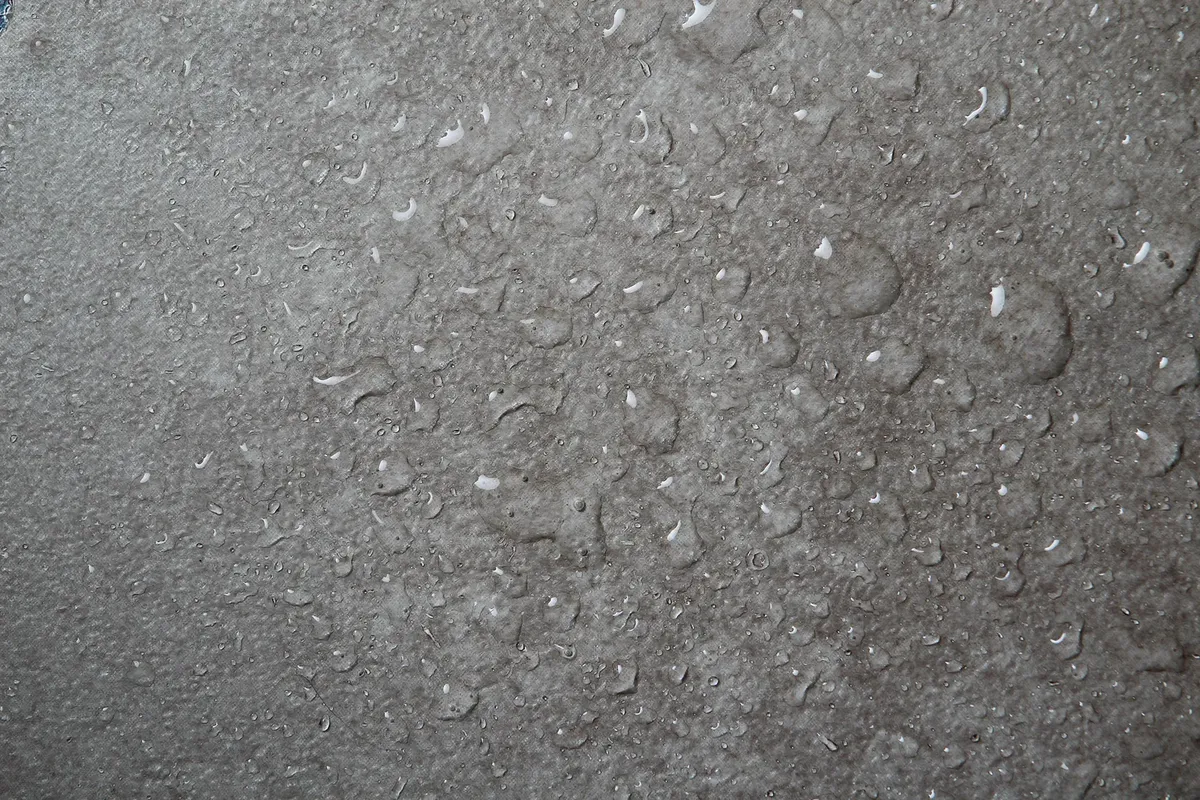
Water is the carrier for most of what damages concrete: chlorides from de-icing salts and seawater, freeze–thaw stress and dirt pick-up on facades. A silane water repellent for concrete penetrates the pore structure and lines the capillaries with a water-repellent layer, so the surface stops absorbing liquid water while it can still release water vapor.
LANDUSIL supplies the full set of building blocks for penetrating concrete protection: neat isobutyl and n-octyl alkyl silanes, alkyl silane/siloxane oligomers, and silane creams and emulsions. Formulators, precast producers and construction-chemical brands use them to build impregnation products for bridges, parking structures, facades and precast elements.
What a Silane Impregnation Does for Concrete
- Cuts capillary water uptake. The treated pore walls repel liquid water, which reduces the transport of dissolved chlorides into the concrete cover.
- Keeps the concrete breathable. Unlike a film-forming coating, a hydrophobic impregnation leaves the pores open, so the substrate can still dry out.
- Preserves the original appearance. A correctly formulated treatment leaves no gloss or film, which suits architectural concrete and fair-faced precast.
- Reduces staining and dirt pick-up. A drier surface holds less soiling and is less prone to biological growth.
- Works alongside repair and coating systems. An impregnation can be part of a protection concept that also includes crack repair, joint sealing or a topcoat.
Typical Uses
End use: Bridge decks, piers and parapets
What matters most
Exposure to de-icing salts; a deep, uniform treatment on mature, clean concrete
End use: Parking garages and ramps
What matters most
Chloride-laden water from vehicles; compatibility with traffic coatings and repaired areas
End use: Architectural facades and precast panels
What matters most
Minimal color change, no gloss, controlled run-off on vertical surfaces
End use: Precast paving units and kerbs
What matters most
Factory application speed, drying time, edge coverage
End use: Marine and coastal structures
What matters most
Splash-zone exposure and reliable application on dense concrete
End use: Repair mortars and overlays
What matters most
Treatment after full cure, without impairing bonding areas
Recommended LANDUSIL Products
| Product | Chemistry | CAS | Why choose it |
|---|---|---|---|
| LEGRA 5040-L | Isobutyltriethoxysilane | 17980-47-1 | The standard monomer for solvent-borne and neat penetrating sealers; releases ethanol on hydrolysis |
| LEGRA 5041-L | Isobutyltrimethoxysilane | 18395-30-7 | Methoxy version with faster hydrolysis; releases methanol |
| LEGRA 5050-L | n-Octyltriethoxysilane | 2943-75-1 | Longer alkyl chain for strong water repellency and alkali resistance |
| LEGRA 5051-L | n-Octyltrimethoxysilane | 3069-40-7 | Octyl methoxy grade for formulators who prefer the methoxy route |
| ANCORIS 5010-L | Octyl silane/siloxane oligomer, solvent-based | Mixture – see SDS | Oligomer route with lower volatility than monomers |
| ANCORIS 5020-L | Isobutyl silane oligomer | Mixture – see SDS | Isobutyl oligomer for penetrating sealer formulations |
| ANCORIS 5030-L | Solvent-free alkyl siloxane | Mixture – see SDS | For low-VOC penetrating water repellents |
| SIVERA 1010-C-80 | Silane/siloxane cream, 80% | Mixture – see SDS | Cream form for long contact time on vertical and overhead surfaces |
| SIVERA 1020-C-40 | Silane cream, 40% | Mixture – see SDS | Lower-concentration cream for facades and precast |
| SIVERA 1030-E-50 | Silane/siloxane emulsion, 50% | Mixture – see SDS | Water-dilutable concentrate for waterborne sealers |
| LANDUSIL LEGRA 5090-L | Cyclohexyltriethoxysilane | 18151-84-3 | Cyclohexyl alkyl silane for screening an alternative hydrophobic structure in penetrating water repellents |
| LANDUSIL LEGRA 5061-L | n-Dodecyltrimethoxysilane | 3069-21-4 | C12 trimethoxysilane for developing hydrophobic mineral surfaces, water-repellent formulations and treated fillers |
How to Select the Right Silane Water Repellent
Isobutyl or octyl?
Isobutyl silanes are small molecules that suit dense concrete and deep penetration. Octyl silanes carry a longer alkyl chain that gives a strongly hydrophobic, alkali-resistant treatment. Many formulators test both on their own concrete, because penetration and performance depend on the pore structure, moisture and application rate rather than on chain length alone.
Ethoxy or methoxy?
Ethoxy grades (5040-L, 5050-L) release ethanol during hydrolysis; methoxy grades (5041-L, 5051-L) react faster and release methanol. The choice affects working-solution stability, reaction speed and the safety information on your finished product.
Delivery form
- Neat or solvent-borne monomers: maximum active content and penetration on horizontal surfaces.
- Oligomers: lower volatility and a different viscosity profile.
- Creams: stay in place on vertical and overhead faces, so more active material soaks in instead of running off.
- Emulsions: waterborne, easy to dilute and suited to low-VOC products.
Application and Evaluation Guidelines
Apply impregnations to clean, sound, cured concrete. Remove curing compounds, release agents, old coatings and dirt first, because they block the pores. Record the moisture condition, orientation and the quantity actually absorbed per square meter, not just the quantity applied.
Compare candidate formulations against an untreated control on representative concrete. Useful tests include capillary water absorption, depth of the hydrophobic zone, water-vapor transmission, appearance, and performance after alkali exposure, weathering or chloride exposure where these are project requirements. Water beading is a good first indicator, but it does not measure penetration depth on its own.
An impregnation does not bridge cracks or resist standing water pressure. Repair defects and seal joints first, and treat integral (in-mix) hydrophobation of fresh concrete as a separate development project.
Frequently Asked Questions
What is the difference between a silane water repellent and a concrete coating?
A silane penetrates the concrete and makes the pore walls water-repellent without forming a film. A coating forms a continuous layer on the surface. Silanes keep the concrete breathable and invisible; coatings can add color, abrasion resistance or crack bridging.
Which factors determine a useful silane concentration?
Performance depends on how much active material is actually absorbed and retained. A cream with lower concentration can outperform a liquid with higher concentration on a vertical wall because less material runs off.
Can silane-treated concrete be painted later?
Treated concrete can often be painted later, but it depends on the coating chemistry and any residue on the surface. Test the intended coating over treated and untreated concrete, including adhesion after conditioning.
What moisture condition should be set for silane application to concrete?
Silanes need some moisture to react, but water-filled pores prevent penetration. Define the allowed moisture condition for your finished product and reproduce it in testing.
What does LANDUSIL supply for concrete sealing and water-repellent formulation?
We supply alkyl silane and oligomer raw materials for formulators, and silane creams and emulsions for producers who want a shorter development route.

Samples and Technical Support
LANDUSIL provides samples, TDS and SDS for all grades listed on this page, and our technical team can help you shortlist candidates for your concrete and exposure conditions. To speed up the recommendation, please include in your inquiry:
- Concrete type, age and surface finish, plus any previous treatment
- Exposure (de-icing salts, marine, facade rain) and application method (spray, roller, factory line)
- Your preferred chemistry or carrier (solvent-borne, solvent-free, waterborne) and VOC limits
- Target performance and the test methods you work to
- Estimated annual volume, packaging preference and destination country