

Mineral & Filler Treatment
Silane for Glass Microsphere Treatment
A silane for glass microsphere treatment helps you build a compatible resin interface around spherical glass particles. For hollow microspheres, that interface works alongside the intact shell and enclosed volume that support the lightweighting design. Solid beads offer their own spherical filler geometry and processing role.
LANDUSIL supplies epoxy, amino and methacrylate silanes for processors of solid and hollow glass microspheres. Choose the function using the glass grade, existing finish and resin system, then develop distribution and handling that suit the particle's construction.
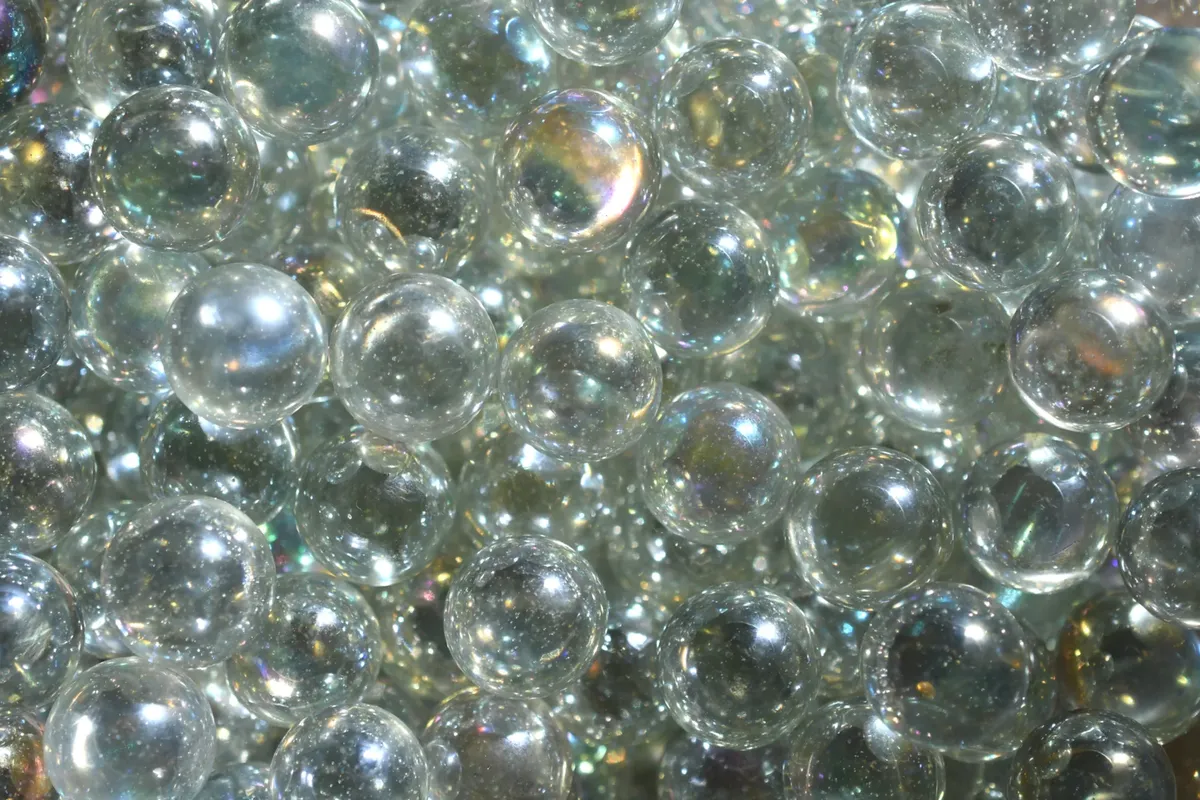
What Silane Treatment Does for Glass Microspheres
- Supports resin wetting. A compatible organic surface helps the binder contact the glass during incorporation.
- Offers a reactive interface. Matched amino, glycidoxy or methacrylate groups provide different binder-facing chemistry.
- Helps manage distribution. Surface compatibility supports a focused approach to wet-in, floating and segregation during processing.
- Supports conditioned adhesion development. A suitable treatment route can be assessed for the exposure required by the final composite.
- Connects powder delivery with forming. Controlled treatment, drying and transfer help producers supply consistent spheres for downstream use.
Typical Uses
End use: Hollow spheres in epoxy syntactic foam
What matters most
Shell integrity, resin cure, composite density and conditioned mechanics
End use: Lightweight polyester castings
What matters most
Wetting, sphere distribution, cure and finished surface quality
End use: Low-density thermoplastic compounds
What matters most
Survival through feeding, extrusion and molding
End use: Solid glass bead coupling
What matters most
Same-grade comparison of interface behavior and spherical packing
End use: Treated microsphere powder supply
What matters most
Agglomerates, moisture, transfer damage and consistent metering
Recommended LANDUSIL Products
| Product | Chemistry | CAS | Why choose it |
|---|---|---|---|
| LANDUSIL LEGRA 2010-L | 3-Glycidoxypropyltriethoxysilane | 2602-34-8 | Glycidyl interface for suitable glass surfaces and a matched epoxy or hardener system |
| LANDUSIL LEGRA 1010-L | 3-Aminopropyltriethoxysilane | 919-30-2 | Amino-bearing glass interface for compatible reactive binders with the cure balance identified |
| LANDUSIL LEGRA 4011-L | 3-Methacryloxypropyltrimethoxysilane | 2530-85-0 | Methacrylate functionality for suitable polyester, vinyl-ester or acrylic radical-curing systems |
How to Select a Silane for Glass Microsphere Treatment
Identify solid or hollow construction
Start with glass composition, size distribution and existing surface treatment. For hollow grades, obtain density and strength information together with the methods used by the sphere supplier. This helps you map material selection to the handling route.
A syntactic foam uses hollow particles to introduce enclosed voids. Its resin volume and sphere integrity therefore form part of the formulation design. Solid beads address spherical packing and resin interaction through a different particle structure.
Match the organic group with the cure
Glycidoxy treatment presents an epoxide for a suitable resin or hardener partner. Amino treatment provides an amine-bearing interface that can influence cure balance and working time in compatible systems. Choose the chemistry using the complete binder package.
Methacrylate functionality addresses matched radical-curing polyester, vinyl-ester or acrylic systems. Include the initiator and storage conditions when defining the surface program. For downstream thermoset processing, see mineral-filled thermoset molding compounds.
Design the complete handling path
Map treatment, liquid removal where used, drying, packaging, unloading, metering, mixing and transfer. Choose equipment and exposure that distribute the agent while preserving useful particles. Check tight clearances, impact points and dispersive mixing where the selected hollow grade may be vulnerable.
Low-density powders occupy a different volume from dense mineral fillers at the same mass. Include the expected bulk handling and filler volume in the metering plan. A treatment trial becomes more useful when it follows the same path as the powder supplied to production.
Application and Evaluation Guidelines
Use starting spheres and the current treated grade as references. Keep the glass, resin and relevant filler volume comparable. Track treatment retention, free residue, moisture, agglomerates and feeding behavior after storage. Ethoxy grades release ethanol on hydrolysis; methoxy grades release methanol. Follow SDS requirements for the chosen treatment route.
Inspect particle integrity after the important manufacturing and incorporation steps. Use suitable particle observations and density measurements to assess shell survival. In the composite, identify entrained air and segregation alongside the intended hollow volume before interpreting a density change.
Compare cure, adhesion and mechanical properties under the required moisture or other exposure. Bulk density, particle density and composite density answer different questions. A flotation test alone does not establish treatment uniformity, and an isostatic crush result does not establish survival in every mixer or pump. An ordinary quartz high-shear process can damage fragile hollow spheres, so establish conditions for the actual grade and equipment.
Pressure, electrical and other specialized product requirements belong to the complete material and intended component. Keep that acceptance task tied to the relevant construction and test conditions.

Frequently Asked Questions
Which silane is used on hollow glass microspheres for epoxy?
Compare glycidoxy or amino functionality using the actual glass finish, resin and hardener. Follow surface treatment and shell integrity together with cure, density and conditioned composite properties.
How can I reduce breakage during microsphere treatment?
Map the mechanical exposure through mixing, drying, transfer and compounding. Choose distribution and handling with the sphere supplier's grade information, then inspect particles after the important steps.
Should treated microspheres be compared by mass or volume?
Use the basis relevant to the formulation and record both where useful. Volume fraction is especially helpful for hollow-sphere comparisons because density differences affect the amount of resin occupied by a given mass.
What should I test if microspheres float during casting?
Check wetting and treatment distribution along with particle density, filler volume and resin flow. Observe segregation through the actual casting and curing period to guide the next comparison.

Samples and Technical Support
LANDUSIL provides samples, TDS, SDS and selection support for glass-microsphere treatment. Please include:
- Glass grade, solid or hollow construction and existing finish
- Size, density and supplier strength information with test methods
- Resin, hardener or initiator and intended filler volume
- Treatment, drying, transfer and forming equipment and main defect
- Estimated quantity, packaging preference and destination country