

Connect chemistry with your process.
A material that works in principle still has to work in your process. Application support connects material choice with the conditions in which it will be used.
Discuss compatibility, dosage, mixing sequence, application method and curing conditions, together with the issue you are trying to understand. Clear process details focus the technical exchange and point to useful comparisons.

- Start with
- Your process and what you observe
- You receive
- Focused questions and trials
- Often followed by
- Sample Evaluation
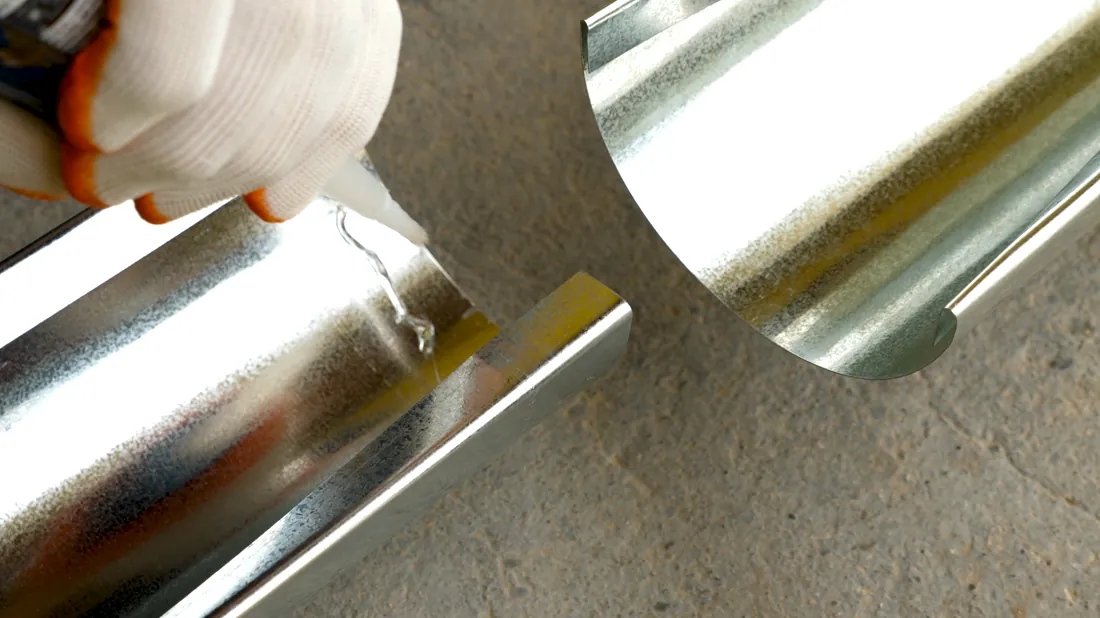
When application support helps
- 01
Compatibility
A candidate material behaves differently once it meets the other ingredients in your formulation.
- 02
Processing
Dosage, mixing order, application method or curing conditions are affecting the result.
- 03
An unexpected result
Adhesion, appearance, stability or water resistance is not what you expected.
Application areas, each with its own questions.
The questions change with the application. These are the points we typically start from in each area.
Construction & surfaces

Building & construction
We start from
- Substrate and binder chemistry
- Addition during mixing or treatment after application
- Water absorption, appearance and strength requirements
Related familiesSIVERAFormulations & additivesLEGRAFunctional silanesANCORISSilane oligomers
Coatings & inks
We start from
- Binder chemistry and waterborne or solvent-based system
- Substrate and application method
- Curing conditions and film properties
Related familiesNOVERAResins & bindersLEGRAFunctional silanesSIVERAFormulations & additives
Artificial stone & quartz
We start from
- Mineral blend and particle size distribution
- Resin binder and mixing conditions
- Curing process and surface finish
Related familiesLEGRAFunctional silanesLATERASurface treatments
Polymers & bonding

Adhesives & sealants
We start from
- Substrates and surface preparation
- Curing system and processing conditions
- Storage conditions and end-use requirements
Related familiesLEGRAFunctional silanesDUVERASilicone fluidsINCURARTV crosslinkers
Composites & glass fiber
We start from
- Reinforcement type and resin matrix
- Fiber treatment and composite processing
- Curing conditions and interface properties
Related familiesLEGRAFunctional silanesANCORISSilane oligomersLATERASurface treatments
Rubber & plastics
We start from
- Polymer chemistry and filler package
- Processing temperature and mixing sequence
- Curing system and finished-compound properties
Related familiesLEGRAFunctional silanesLATERASurface treatmentsSIVERAFormulations & additives
Wire & cable compounds
We start from
- Polymer grade and filler package
- Compounding, extrusion and curing conditions
- Finished-compound specifications
Related familiesLEGRAFunctional silanesLATERASurface treatments
Industrial processing

Pigments & mineral fillers
We start from
- Particle chemistry and surface condition
- Compatibility with the polymer or liquid medium
- Treatment process and dispersion requirements
Related familiesLATERASurface treatmentsLEGRAFunctional silanesANCORISSilane oligomers
Metal surface treatment
We start from
- Metal or alloy and surface preparation
- Treatment medium and processing sequence
- Compatibility with the coating or adhesive
Related familiesLEGRAFunctional silanesANCORISSilane oligomers
Foundry & investment casting
We start from
- Sand, refractory and mineral composition
- Binder chemistry and casting process
- Curing conditions and process specifications
Related familiesUNARAIntermediates & catalystsLEGRAFunctional silanes
Silicone manufacturing
We start from
- Chemical identity and functional groups
- Synthesis route or formulation process
- Purity, viscosity and delivery form
Related familiesUNARAIntermediates & catalystsDUVERASilicone fluidsNOVERAResins & binders
Specialty applications

Textiles & fabric treatment
We start from
- Fiber composition and fabric construction
- Finishing bath and application process
- Fabric feel and finishing requirements
Related familiesDUVERASilicone fluidsSIVERAFormulations & additives
Agricultural formulations
We start from
- Formulation type and dilution conditions
- Wetting, spreading and foam-control needs
- Compatibility and conditions of use
Related familiesSIVERAFormulations & additives
What we look at together.
- 01
Formulation
- Dosage and point of addition
- Order of addition and mixing
- Pre-hydrolysis and pH
- Interaction with fillers and additives
- 02
Surface
- Substrate type and condition
- Cleaning and preparation
- Moisture and alkalinity
- Porosity and absorption
- 03
Process
- Mixing energy and temperature
- Application method and film thickness
- Pot life and open time
- Storage of mixed components
- 04
Cure & service
- Cure temperature, time and humidity
- Post-cure
- Exposure in service
- Timing of tests after application
Typical questions and where we look first.
Weak or uneven adhesion
Where we look firstSurface preparation, the choice and dosage of the coupling agent, and whether cure conditions allow the interface to form.
Short pot life or early gelling
Where we look firstMoisture in raw materials, hydrolysis before use, catalyst level and storage of the mixed system.
Water repellency below expectation
Where we look firstSubstrate alkalinity and porosity, penetration, dosage and the time allowed before testing.
Haze, craters or surface defects
Where we look firstCompatibility with the binder, foam and wetting behaviour, and the solvent or water balance.
Viscosity change in storage
Where we look firstMoisture ingress, reactive groups in the formulation and the packaging used.
Performance loss after ageing
Where we look firstExposure conditions, the test method and how the reference behaves under the same conditions.
How the discussion works
- 01
Describe
Share the process and what you observe, with photos or test results where available.
- 02
Narrow down
Together we separate material, formulation and process factors.
- 03
Suggest
We propose adjustments or comparisons to test, based on the material and its documentation.
- 04
Confirm
Results from your trials guide the next discussion or a sample evaluation.
What you receive
- 01
Focused questions
A shared view of which variables matter most for the result.
- 02
Practical comparisons
Suggested trials that change one factor at a time.
- 03
Agreed next steps
The actions and open questions recorded for the next discussion.
Can you help if the material came from another supplier?
Share what you know about the material and the process. We can discuss the variables involved and, where our portfolio offers a candidate, how to compare it.
Do you need our full formulation?
Not always. The ingredients that interact with the silane or silicone, the dosage and the process conditions are usually the most useful starting point. A non-disclosure agreement is available for detailed discussions.
What if the issue needs a different material?
The discussion may lead to a new candidate, a sample evaluation or, where no standard grade fits, a custom formulation.
Describe your process.
Send the formulation, the process conditions and what you observe. Our technical team will follow up by email.
Or write to info@landusil.com
- 01
Send your brief
A few lines on the application and what you need are enough to start.
- 02
Review it together
We come back with questions or a first suggestion.
- 03
Agree the next step
Selection, support, a sample or a development plan.