

Rubber & Plastics
Silanes for Mechanical Rubber Goods
Silanes for mechanical rubber goods help connect silica with compatible sulfur-cured elastomers used in hoses, belts, seals and elastic supports. The coupling route supports reinforcement development while you balance flexibility, processing and retained properties under the component's working conditions.
LANDUSIL supplies sulfur-functional silanes and supported formats for industrial-rubber compounders. Mineral-wetting options provide an additional route when the task centers on powder incorporation. Choose the role around the actual elastomer, filler and service duty.
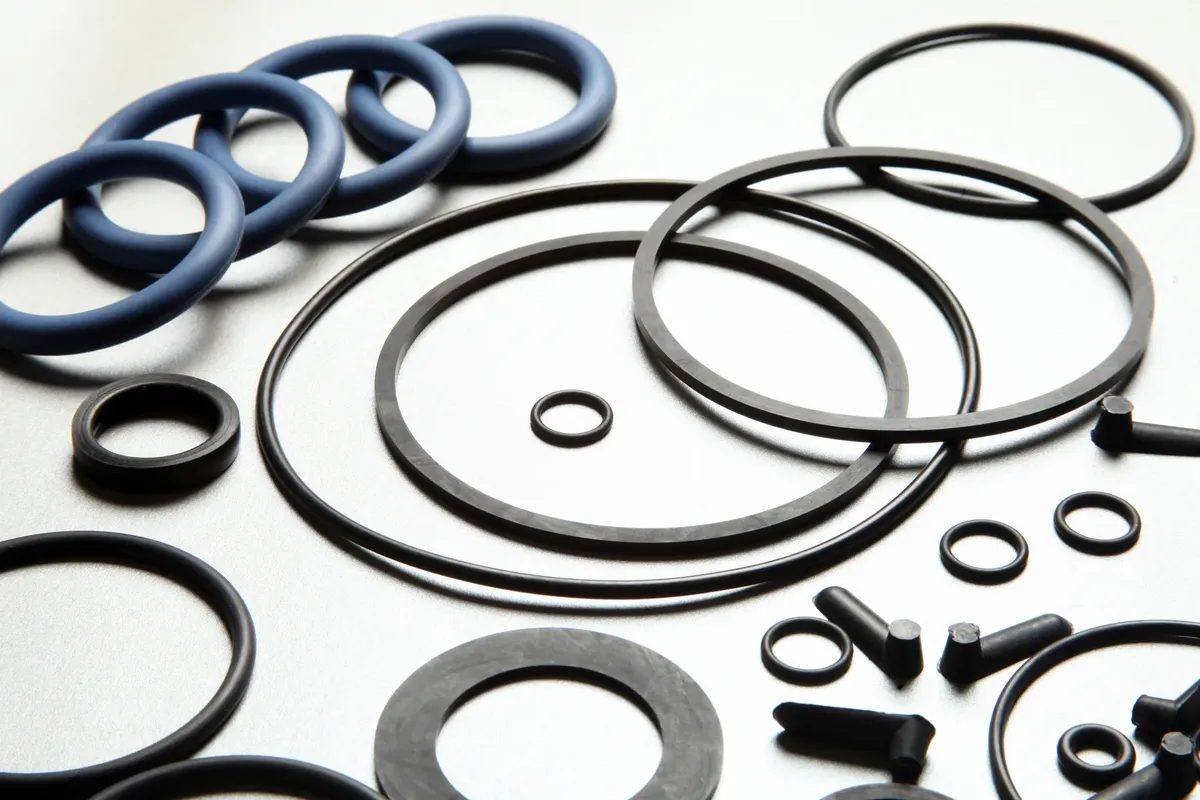
What Silanes for Mechanical Rubber Goods Do
- Build the silica interface. Alkoxysilyl groups provide the mineral-side reaction path in a suitable silica compound.
- Connect with sulfur vulcanization. Sulfur-functional structures participate in compatible rubber-side reactions.
- Support reinforcement balance. Controlled filler treatment helps develop mechanical response together with useful processability.
- Offer sulfur-chemistry choices. Tetrasulfide and disulfide routes let you study mixing behavior and cure contribution together.
- Fit industrial handling. Liquid or supported introduction can be selected around available dosing and mixing equipment.
Typical Uses
Component: Hose covers and inner layers
Main formulation and service questions
Flexibility, layer construction, abrasion and the actual fluid or environment
Component: Conveyor-belt covers
Main formulation and service questions
Cutting, tearing, wear, repeated bending and heat buildup
Component: Vibration blocks and supports
Main formulation and service questions
Static preload, movement, stiffness, damping and fatigue
Component: Static gaskets and molded seals
Main formulation and service questions
Compression, assembly geometry, media and retained elasticity
Component: Mixed silica/carbon-black compounds
Main formulation and service questions
Filler balance, incorporation and consistent vulcanization
Recommended LANDUSIL Products
| Product | Chemistry | CAS | Why choose it |
|---|---|---|---|
| LANDUSIL LEGRA 8020-L | Bis[3-(triethoxysilyl)propyl]tetrasulfide | 40372-72-3 | Silica-coupling route for a compatible sulfur-cured industrial compound |
| LANDUSIL LEGRA 8030-L | Bis[3-(triethoxysilyl)propyl]disulfide | 56706-10-6 | Disulfide route for coordinated mixing and sulfur-package development |
| LANDUSIL SIVERA 8010-S-50 | Carbon-black-supported tetrasulfide silane | Mixture – see SDS | Supported delivery for compounders accounting for active and carrier contributions |
| LANDUSIL LATERA 1010-L | Isopropyl titanium triisostearate | 61417-49-0 | Mineral-wetting and dispersion option with its own compatibility review |
How to Select Around the Component's Duty
Identify the elastomer and filler package
Record the specific NR, SBR, BR, NBR or blend grade, its filler system and the sulfur/accelerator package. This gives the silane comparison a clear reaction environment. The mineral identity and existing surface treatment also guide whether silica coupling or a different wetting approach addresses the problem.
LEGRA 8020-L provides a tetrasulfide-type bridge and LEGRA 8030-L a disulfide-type bridge. Both carry ethoxy-based groups for the silica-side chemistry. Include their actual composition and sulfur contribution in the formulation balance.
Choose a practical delivery form
A controlled liquid feed fits direct introduction during compounding. SIVERA 8010-S-50 places a tetrasulfide silane on carbon black, adding a carrier that becomes part of the compound. Define the comparison on confirmed active content and total filler balance.
For silica supplied with treatment already on its surface, see Pretreated Silica for Sulfur-Cured Rubber. When the mineral task mainly concerns wetting, LATERA 1010-L offers a titanate route with a different chemical role from sulfur silanes.
Translate the failure mode into a target
A cracked belt cover, swollen hose layer and gasket with poor elastic recovery need different test programs. Define the failure location, service medium and loading pattern before selecting the property to improve. This keeps the trial connected to the customer's component.
For metal inserts joined during vulcanization, use Metal-Rubber Covulcanization Primers. Filler-interface development and insert bonding have different addition points and surface-preparation needs.
Application and Evaluation Guidelines
Connect the mixing record with final curative addition, storage and forming. Include silica moisture, incorporation sequence, mixing energy and measured time–temperature history. Ethoxy-based surface chemistry can release ethanol; consult current TDS and SDS and review plant extraction and handling.
Compare the reference and modified compounds at matched filler loading and conditioning. Account for deliberate sulfur or accelerator changes, carrier contribution, hardness and cure state. These controls help you interpret whether the change comes from reinforcement, processing or a different network.
| Test area | Component-focused evaluation |
|---|---|
| Processing | Viscosity, dispersion, scorch, cure response and forming stability |
| Damage resistance | Appropriate tensile, tear and abrasion measurements with failure examination |
| Sustained compression | Elastic recovery and compression set under defined conditions |
| Repeated movement | Fatigue, dynamic stiffness, damping and heat buildup |
| Fluid or environmental exposure | Dimensions, swelling and retained mechanical properties |
| Representative parts | Thickness effects, layer adhesion and actual geometry |
Compression set alone does not describe vibration fatigue, and immersion results cannot directly predict component life. Select tests around the service load and exposure. A tire-compound result also needs a new comparison before transfer to a hose or industrial seal. Sulfur-functional silanes, mineral-wetting agents and metal-bonding primers perform different jobs, so confirm each required interface in the assembled part.

Frequently Asked Questions
Which sulfur silane should I test for silica-filled industrial rubber?
Tetrasulfide-type and disulfide-type bis-silanes are useful options in compatible sulfur-cured compounds. Compare their actual sulfur contribution, mixing history and cure behavior in the elastomer used for your component.
What should a hose compound trial include?
Identify the layer, actual medium and operating deformation. Check processing, cure, mechanical properties and retention after relevant exposure, then examine the representative hose construction and its interfaces.
How should a silane be evaluated in vibration mounts?
Measure the required static stiffness and compression behavior together with repeated-deformation response, damping, fatigue and heat buildup. Use representative preload, geometry and conditioning.

Samples and Technical Support
LANDUSIL provides samples, TDS, SDS and material-selection support for industrial rubber compounds. Please include:
- Elastomer grades, silica and other fillers, and current treatment
- Sulfur/accelerator package, mixing record and forming method
- Component geometry, service load, medium and current failure mode
- Required mechanical, compression, fatigue and aging tests
- Estimated quantity, packaging preference and destination country