

Wire & Cable Compounds
Ceramifying Silicone Cable Ingredients
Ceramifying cable development connects flexible insulation in normal use with a coherent protective residue during severe heating. Ceramifying silicone cable ingredients give you polymer, resin and mineral-interface options for studying that transition. The useful formulation balances extrusion and cure with the way the layer shrinks, cracks and retains coverage through the heating sequence.
LANDUSIL supplies selected silicone polymers, resins and functional silanes for formulation teams. Build the study around your extrusion-grade base gum, mineral package and specified flux system. Our ingredients enter defined reaction, resin-phase or surface-treatment roles within that complete development program.
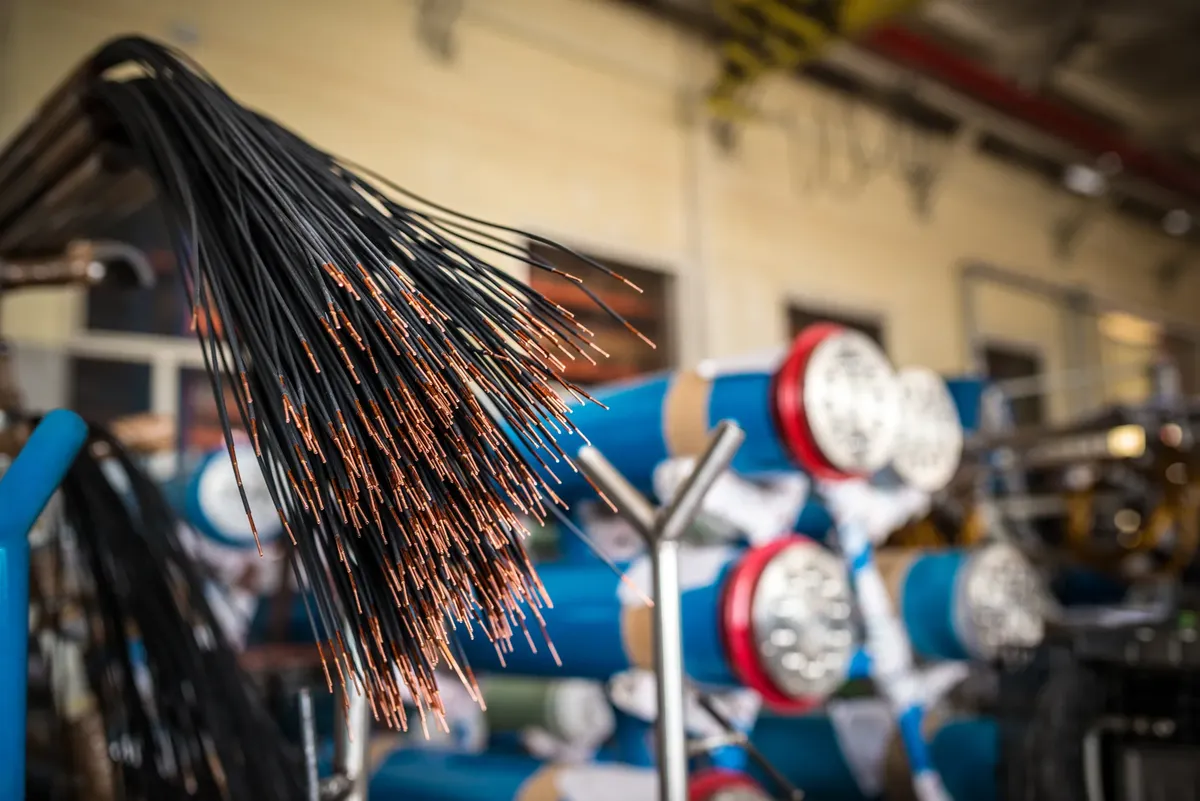
What Ceramifying Silicone Cable Ingredients Contribute
- Reactive silicone structure. Vinyl-functional polymer components support the initial elastomer network in a matched cure design.
- A resin-phase option. Vinyl MQ and phenyl resin directions let you compare incorporation, stiffness and the mechanical balance.
- Controlled mineral interfaces. A compatible silane treatment provides a route for studying selected filler surfaces.
- A link between processing and residue development. Ingredient comparisons can follow the material from conductor coating through heating.
- A structured fire-exposure study. Examining intermediate stages helps connect residue cohesion with conductor coverage and electrical measurements.
Typical Uses
Development task: Fire-exposed insulation layers
What matters most
Cable construction, electrical duty and required disturbance conditions
Development task: Silicone mineral composites
What matters most
Base network, mineral and flux package, flexibility and heat response
Development task: Mica and wollastonite interfaces
What matters most
Particle morphology, existing treatment and cure compatibility
Development task: Extruded layers for residue studies
What matters most
Shape retention, dispersion, wall thickness and initial cure
Development task: Heated residue cohesion
What matters most
Shrinkage, cracking, coverage and electrical behavior through heating
Recommended LANDUSIL Products
| Product | Chemistry | CAS | Why choose it |
|---|---|---|---|
| LANDUSIL DUVERA 5020-L | Vinyl-terminated polydimethylsiloxane | 68083-19-2 | Reactive polymer or flow-modifying component for a specified addition-cure formulation |
| LANDUSIL NOVERA 3010-L | Vinyl MQ silicone resin | See SDS | Resinous phase for comparing vinyl contribution, reinforcement and flexible-matrix behavior |
| LANDUSIL NOVERA 2090-P | Phenyl silicone resin powder | See SDS | Resin-binder direction for incorporation, matrix compatibility and heated-residue studies |
| LANDUSIL LEGRA 3010-L | Vinyltriethoxysilane | 78-08-0 | Mineral-interface treatment for a defined surface and compatible silicone cure; hydrolysis releases ethanol |
How to Select the Network and Mineral Interface
Define the ordinary-service compound
Establish the extrusion-grade gum, reinforcing silica, cure route and intended wall geometry. Assess a liquid vinyl polymer for its molecular characteristics, reactive input and effect on uncured shape retention. Include all vinyl and Si–H sources in the balance for an addition-cure formulation.
For a resin study, confirm supply form, carrier and relevant functionality. Compare incorporation and the resulting hardness, tear and bending response. NOVERA 2090-P provides a resin-binder direction, while NOVERA 3010-L brings vinyl MQ chemistry to a specified network study.
Identify the mineral and flux package
Record every mineral's grade, morphology, particle characteristics, impurities and existing coating. Mica and wollastonite require their own treatment rationale and preparation. Review surface water and residual treatment species before mixing with the silicone base.
Select an interface agent for the actual surface and cure system. Evaluate treatment uniformity and retained residues on the prepared powder, then assess the complete compound. For reinforcing silica preparation, use the silica-treatment route to connect the upstream operation with residue control and incorporation.
Follow the material through heating
Define the temperature history, heating rate, atmosphere, dwell, specimen geometry and support for the study. Examine intermediate stages to see when the layer softens, loses cohesion, shrinks or develops a coherent residue. Relate these observations to the intended conductor geometry.
Measure cracking, dimensional change and relevant mechanical response together. Interpret porosity and density against the required insulation function. Compare the original cured layer, behavior during heating and the cooled residue as identified test states.
Application and Evaluation Guidelines
Start with the current complete formulation. Change the resin, mineral or surface treatment in controlled comparisons, recording any necessary cure-equivalent adjustment. Include an untreated-mineral control where practical. Verify extrusion, initial flexibility and cure before extending the study to heated residue.
Use the listed ingredients within your complete ceramifying and flux design. Pair the liquid PDMS component with an appropriate extrusion-grade base gum, and evaluate phenyl resin powder for its binder role. Define the base compound and mineral system around their actual functions. For amino-treated minerals in addition curing, test the effect of the real treatment and residuals on platinum-catalyst compatibility.
Compare coverage, shrinkage, cracks and strength through the heating sequence. A strong cooled coupon alone cannot establish support during earlier heating. Assess electrical response independently at the defined test state and investigate conductive contamination or local loss of coverage where relevant.
Cable circuit integrity requires the intended construction and applicable test program, including mechanical disturbance or water exposure when specified. Residue appearance does not establish that qualification. Evaluate flame propagation and smoke as their own outcomes, while retaining acceptable ordinary-service flexibility, tear and aging behavior.

Frequently Asked Questions
What is important when selecting ingredients for ceramifying silicone cable materials?
Match the silicone network, mineral and flux package to the intended cable layer. Compare processability and flexibility before fire exposure, then follow residue development, coverage and electrical response through the required heating sequence.
What does a phenyl silicone resin powder contribute to development?
It provides a resin-binder direction for studying incorporation and matrix compatibility. Compare its effect on the flexible compound and heated residue with the established formulation, using the actual supply form and functional information.
How should mica and wollastonite treatments be compared?
Identify each mineral grade, morphology and existing coating. Prepare the treatment under controlled conditions, check residuals and cure compatibility, then compare extrusion and the heated layer using consistent geometry and exposure.
Which measurements help evaluate a fire-exposed silicone residue?
Track dimensional change, cracking, cohesion and conductor coverage. Measure relevant electrical properties at clearly identified hot or cooled states, then connect promising material results with the specified cable-level evaluation.

Samples and Technical Support
LANDUSIL provides ingredient samples, TDS, SDS and selection support for ceramifying cable-material studies. Please include:
- Base gum, cure system and proposed polymer or resin role
- Mineral grades, existing coatings and specified flux system
- Extrusion sequence, wall geometry and normal-use requirements
- Heating program, intended cable test and the stage where failure occurs
- Estimated quantity, packaging preference and destination country