

Electronics & Electrical
Silicone Resins for Coil Impregnation
A winding varnish must enter the intended spaces, remain after draining and cure within the coil. Silicone resins for coil impregnation provide binder ingredients for developing that sequence around wire enamel, tapes, liners and the complete winding construction.
LANDUSIL supplies solid, solution, powder, emulsion and reactive resin approaches for insulation-varnish formulation. Motor and electrical insulation developers can choose supply form and chemistry around trickle, dip-and-bake or a defined vacuum-pressure impregnation study.
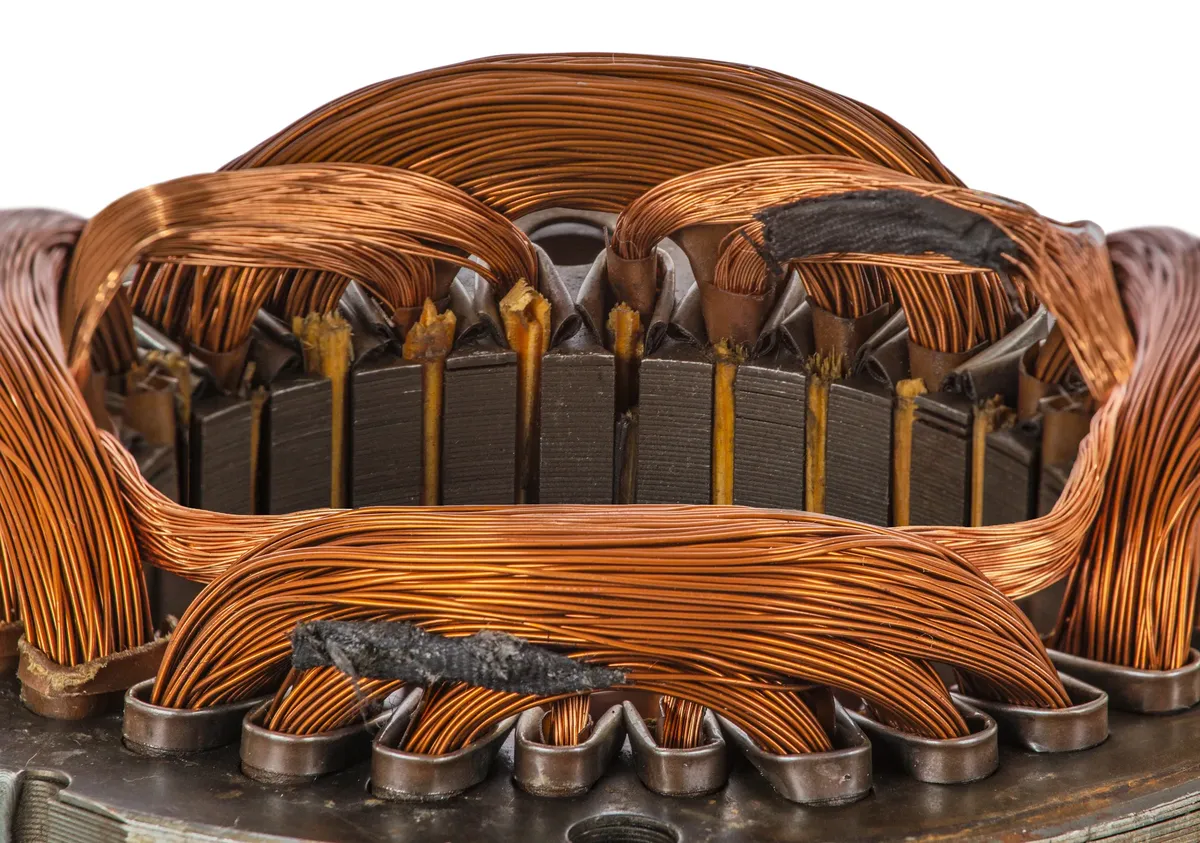
What Silicone Resins for Coil Impregnation Do
- Provide a binding phase. The formulated resin supports bonding and retention within the winding.
- Offer introduction choices. Solid and liquid supply forms let you develop the varnish around the manufacturing equipment.
- Support reactive resin design. Defined functional groups provide routes to a matched cure or resin-modification process.
- Connect wetting with internal distribution. Formulation selection can address contact with wire enamel and other insulating surfaces.
- Support complete-system development. The resin is selected together with the conductor insulation, tapes and forming history.
Typical Uses
End use: Trickle impregnation
What matters most
Controlled delivery, uptake and distribution inside the coil
End use: Dip and bake
What matters most
Immersion, drainage, retained binder and internal carrier removal
End use: Vacuum-pressure impregnation development
What matters most
Bath stability, equipment fit, winding preparation and cure
End use: Heat-exposed winding insulation
What matters most
Wire enamel, liners, tapes and resin evaluated as a construction
End use: Mechanically retained winding assemblies
What matters most
Bonding and response to movement or vibration after conditioning
Recommended LANDUSIL Products
LANDUSIL NOVERA 2010-S supplies a solid methyl phenyl resin binder. Each supply form below requires its own varnish preparation and internal drying or cure assessment.
| Product | Chemistry | CAS | Why choose it |
|---|---|---|---|
| NOVERA 2010-S | Solid methyl phenyl silicone resin | See SDS | Binder preparation through a suitable dissolution or processing route |
| NOVERA 2010-L-XY60 | Methyl phenyl silicone resin, xylene solution | Mixture – see SDS | Resin-solution starting point for impregnation-varnish development |
| NOVERA 2040-L | Methoxy-functional methyl phenyl silicone resin | See SDS | Reactive resin component with a defined condensation or modification route |
| NOVERA 2090-P | Phenyl silicone resin powder | See SDS | Powder-binder route requiring a formulated liquid impregnation stage |
| NOVERA 2070-E-45 | Waterborne phenyl silicone resin emulsion | Mixture – see SDS | Aqueous formulation approach with dispersion and drying requirements |
How to Select a Winding Resin Route
Start with the winding construction
Identify wire enamel, slot liners, tapes and other contacting materials. Include winding density and the regions that liquid must reach. Select the resin and carrier around compatibility with those materials and the actual application method.
Choose supply form and preparation
A solid or powder binder requires a suitable route to the liquid formulation used for impregnation. A supplied solution adds carrier identity, actual nonvolatile content and solvent-removal needs. An emulsion adds dispersion stability, water removal and film formation to the process.
Match the reactive structure
For NOVERA 2040-L, define actual methoxy functionality, reaction partners and the cure route. Include water management and released alcohol through the designed condensation process. Select other resin functionalities through their own reactive data. Methyl and Phenyl Silicone Resin Manufacturing provides the upstream resin-manufacturing context.
Fit the impregnation method
Trickle application emphasizes delivery and uptake. Dip-and-bake emphasizes drainage and retained resin. A vacuum-pressure study adds bath condition, equipment compatibility and winding preparation. Coordinate each route with its intended working-liquid condition and cure sequence.
Application and Evaluation Guidelines
Evaluate the formulation through storage and use, including viscosity drift, phase stability and reaction advancement. Check wetting against representative enamel and insulating materials. Track uptake, drainage, retained air and distribution within difficult-to-reach regions.
Measure the internal thermal history during drying and cure. Solvent evaporation, water removal and condensation products present different transport tasks. An oven setting does not establish the temperature throughout a dense winding. Verify internal cure and interfaces alongside free-film references.
Assess electrical response before and after the relevant thermal and moisture exposure using the intended construction and method. Include mechanical retention where movement or vibration is part of the requirement. A resin family or brief heat exposure cannot establish an insulation-system thermal class.
Use actual resin content and grade documentation when comparing supply forms. Suffixes such as XY60 and E-45 do not replace measured formulation data. Treat the varnish, enamel and other insulating materials as a combination that needs its own compatibility and acceptance evidence.

Frequently Asked Questions
Which silicone resin form suits an impregnation varnish?
A solution offers a liquid resin starting point, while a solid or powder resin can enter a formulated varnish through suitable preparation. An emulsion offers an aqueous route with its own drying requirements.
What should be checked for dip-and-bake impregnation?
Evaluate uptake during immersion, drainage, retained resin and removal of carrier or reaction products. Verify cure through the actual winding after the planned thermal history.
Which details are needed for vacuum-pressure impregnation development?
Provide equipment sequence, winding construction, bath condition and viscosity requirements. Include air removal, internal distribution and the cure process used after impregnation.
How is winding insulation performance evaluated?
Use the actual wire enamel, tapes, liners and resin combination. Compare electrical behavior, bond retention and relevant mechanical response after the defined thermal and moisture conditioning.

Samples and Technical Support
LANDUSIL provides samples, TDS, SDS and resin-selection support. Include:
- Winding geometry, wire enamel and insulation materials
- Trickle, dip-and-bake or vacuum-pressure method
- Working-liquid, drainage and cure requirements
- Electrical, thermal ageing and mechanical evaluation criteria
- Expected quantity, packaging preference and destination country