

Technical Data Sheet
LANDUSIL DUVERA 5010-L
Specification limits, typical properties, guidelines for use, handling, storage and packaging in one document.
FamilyGrades

DUVERA · Reactive End-Functional Polysiloxanes
LANDUSIL DUVERA 5010-L is epoxy-terminated polydimethylsiloxane, a functional PDMS polymer for developing reactive siloxane-modified resins and adhesives. Epoxy functionality provides a route for connecting a silicone segment with a suitable curing partner, while the siloxane backbone brings a distinct polymer segment into the formulation.
Choose this chemistry when you want to study the relationship between silicone modification, resin compatibility and cured behavior. Adhesive formulators, composite resin producers and hybrid-resin manufacturers can build their development work around the measured epoxy equivalents and the selected base resin.

| Item | Information |
|---|---|
| Product | LANDUSIL DUVERA 5010-L |
| Chemical name | Epoxypropoxypropyl-terminated polydimethylsiloxane |
| Common description | Epoxy-functional PDMS |
| CAS number | See SDS |
| Reactive chemistry | Epoxy end-functional silicone polymer |
| Reactive group | Epoxy (glycidyl ether), both ends |
| Physical form | Liquid |
| Active content | approx. 100 % |
| Product family | Reactive End-Functional Polysiloxanes |
| Property | Value | Test method |
|---|---|---|
| Appearance | Clear liquid | Visual |
| Kinematic viscosity, 25 °C | 20 – 35 mm²/s | Capillary viscometer, 25 °C |
| Epoxy content | 1.6 – 1.9 mmol/g | Titration |
| Property | Typical value |
|---|---|
| Molecular weight | approx. 1,000 – 1,400 g/mol |
| Refractive index, nD25 | approx. 1.417 |
| Density, 25 °C | approx. 0.98 g/mL |
Typical values are provided for reference only and are not to be construed as specifications. Please refer to the current Technical Data Sheet (TDS) and Certificate of Analysis (CoA) for the supplied grade.
Technical Data Sheet
Specification limits, typical properties, guidelines for use, handling, storage and packaging in one document.

DUVERA 5010-L provides an epoxy-functional siloxane route for adhesive formulation. In reactive siloxane modification of epoxy adhesives, develop resin compatibility and reactive balance before comparing joint shear, peel and toughness.
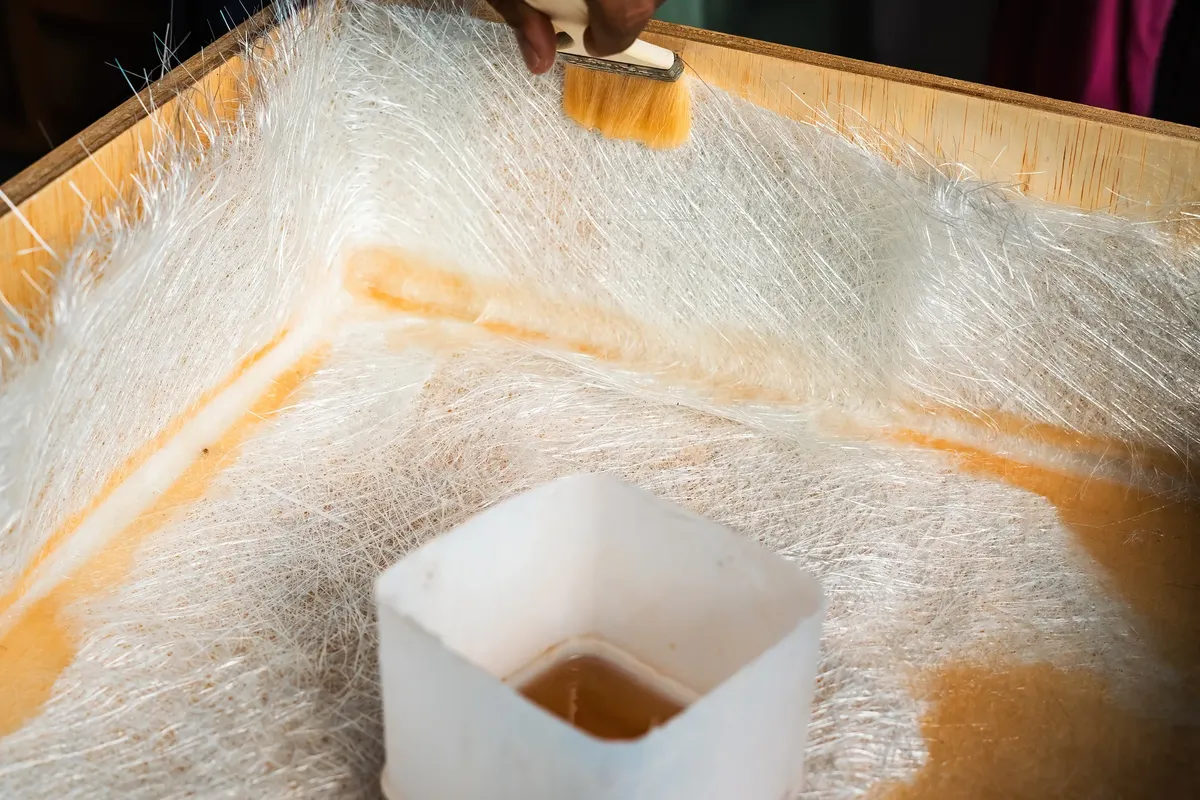
The polymer can enter matrix-modification work for glass-fiber epoxy composites. Epoxy composites and resin infusion connects mixing and flow behavior with fiber wetting, cure and laminate performance.

The material offers a resin-phase modification option for a compatible mineral-filled thermoset formulation. In mineral-filled thermoset molding compounds, link filler dispersion and molding flow with cure and mechanical testing.

Hybrid-resin manufacturers can use an epoxy-functional silicone as an upstream reactive component. Epoxy-siloxane hybrid resin manufacture requires a defined reaction partner and characterization of the resulting resin structure and phase behavior.
Confirm the epoxy type, end-group position, functionality, composition and epoxy equivalent weight in the current grade documentation. Obtain viscosity with its test temperature and method. Use the measured epoxy contribution when balancing the base resin and hardener; the product name does not define one end-group count or a universal replacement level.
Screen mixing order and loading in the actual resin and curing package. Observe uniformity and phase stability through storage, mixing and cure, then assess working time, cure profile and surface defects. Compare adhesive specimens after the conditioning relevant to the joint, or composite specimens after the selected molding and post-processing sequence.
For infusion, track the complete formulation's viscosity over the process time and temperature history and verify fiber wetting. For filled compounds, examine dispersion and molding behavior. Toughness, adhesion and weathering improvements need the corresponding results in the complete system. Distinguish physical blending from chemical incorporation by choosing characterization that fits the proposed reaction.
These levels are starting points. Determine the optimum level and method in trials under your own conditions.

It is a reactive silicone ingredient for adhesive, resin and composite-matrix modification. A suitable curing partner and controlled phase behavior are central to using the epoxy-functional segment.
Request epoxy equivalent weight or epoxy concentration with the analytical method and sample basis. Combine those data with the base resin and curing-agent equivalents.
Measure the complete formulation's flow and working time, then verify fiber wetting, cure and laminate properties. Use the same resin, fibers and processing conditions planned for production.

LANDUSIL offers samples, current TDS and SDS, and reactive-material selection support. Please include: