
Technical Data Sheet
LANDUSIL LEGRA 4010-L
Specification limits, typical properties, guidelines for use, handling, storage and packaging in one document.
FamilyGrades

LEGRA · (Meth)acryloxy Silanes
LANDUSIL LEGRA 4010-L is 3-methacryloxypropyltriethoxysilane (MPTES, CAS 21142-29-0), a coupling ingredient for suitable glass, silica and mineral surfaces in compatible reactive resins. Its methacrylate group provides an organic polymerization site, and three ethoxy groups provide the mineral-reactive silane functionality.
Choose the ethoxy route when your glass treatment, polyester composite or acrylic formulation calls for ethanol-releasing hydrolysis chemistry. The propyl ester linkage connects the two functional ends, helping you design a treatment around both the inorganic surface and the receiving resin.

| Item | Information |
|---|---|
| Product | LANDUSIL LEGRA 4010-L |
| Chemical name | 3-Methacryloxypropyltriethoxysilane |
| CAS number | 21142-29-0 |
| Molecular formula | C13H26O5Si |
| Molecular weight | 290.43 g/mol |
| Hydrolysis by-product | Ethanol |
| Product family | (Meth)acryloxy Silanes |
| Property | Value | Test method |
|---|---|---|
| Appearance | Colorless to light yellow, clear liquid | Visual |
| Purity (GC) | min. 97.0 % | Gas chromatography |
| Property | Typical value |
|---|---|
| Refractive index, nD20 | approx. 1.4277 |
| Flash point, method not reported | approx. 116 °C |
| Density | 0.985 (units/temp unstated) |
| Boiling point | 130 °C (pressure unreported) |
Typical values are provided for reference only and are not to be construed as specifications. Please refer to the current Technical Data Sheet (TDS) and Certificate of Analysis (CoA) for the supplied grade.
Technical Data Sheet
Specification limits, typical properties, guidelines for use, handling, storage and packaging in one document.

LEGRA 4010-L provides a coupling component for glass sizing intended for compatible polyester and related resins. Coordinate the silane with the film former, lubricant and drying process in glass fiber sizing and strand treatment.
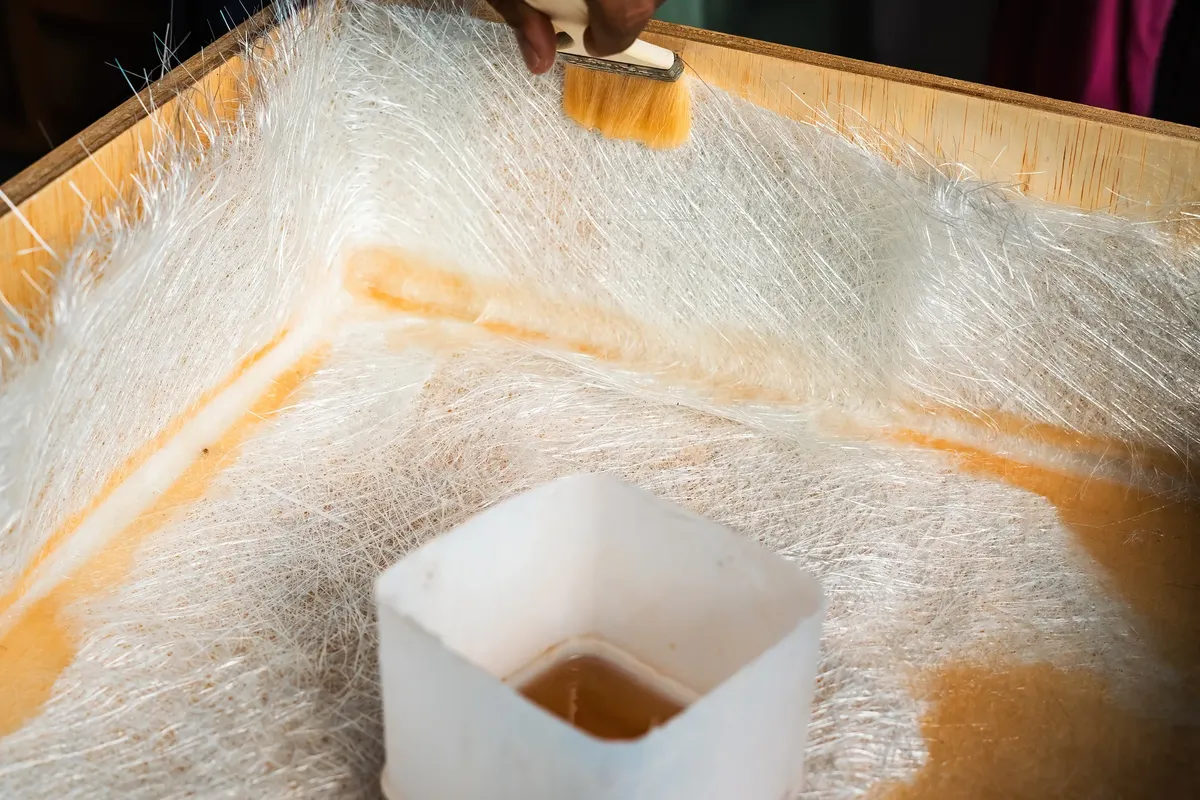
Use the methacrylate group to develop the organic side of a glass–resin interface in a compatible radical-cure system. Polyester and vinyl ester open-mold composites require the treatment to work with resin wetting, reinforcement handling and the selected cure package.

The silane offers a route to treating quartz and other suitable hydroxyl-bearing minerals for polyester binders. In polyester engineered quartz manufacture, develop filler coverage and drying alongside resin demand, mixing and slab cure.

The methacrylate group supports compatible acrylic and selected photoreactive formulations, while controlled silane condensation can build a hybrid interface. For UV and radiation-curable coatings, choose the initiation route around the complete resin and film design.
Begin with the receiving resin and the mineral surface. For glass sizing, define the hydrolysis stage, mixing order, application and drying together with the rest of the size. For powder treatment, account for filler moisture and surface area, then assess retained silane, drying and agglomeration. Compare treated and untreated material in the same complete formulation.
Control water, pH and temperature during hydrolysis and follow ethanol release. Keep the methacrylate group available for the intended resin reaction. If you introduce the material during polymer manufacture, confirm incorporation and residual monomer; direct addition to a finished emulsion needs a compatibility study. Check inhibitor information in the current grade documentation before setting cure or storage conditions.
For UV processing, match initiator, wavelength, exposure and film thickness, including the effect of oxygen, pigments and filler. The silane supplies reactive functionality; select the necessary initiation chemistry in the formulation. Evaluate wetting, conversion, adhesion and moisture-aged composite or coating properties. EVA comparator films reported adhesion loss during extended damp heat, so assess encapsulation interfaces through their actual aging program. Amine-cured epoxy, cationic UV and silicone systems need a reaction route suited to their chemistry.
These levels are starting points. Determine the optimum level and method in trials under your own production conditions.

It is used to develop coupling between suitable glass or mineral surfaces and compatible radical-curing resins. Typical directions include glass sizing, polyester composites, quartz-filled binders and reactive acrylic or hybrid coatings.
The ethoxy grade releases ethanol during hydrolysis; the methoxy grade releases methanol. Compare hydrolysis, working-bath behavior, drying and the finished interface when selecting the route.
Yes, in a complete formulation with suitable initiation and cure conditions. Measure methacrylate conversion and adhesion, and include the intended film thickness, pigment and filler loading in the trial.

LANDUSIL provides samples, current TDS and SDS, and selection support. Include: