

DUVERA · Hydrogen Silicone Fluids
LANDUSIL DUVERA 4010-L Polymethylhydrosiloxane
LANDUSIL DUVERA 4010-L is polymethylhydrosiloxane (PMHS), CAS 63148-57-2, a reactive silicone material carrying silicon-bonded hydrogen. Si–H functionality gives formulators a reaction partner for vinyl-functional silicones in platinum-catalyzed addition systems and a starting chemistry for other defined silicone reactions.
For adhesive, mold-making and reactive-silicone manufacturers, the key design task is to match reactive equivalents and polymer architecture. DUVERA 4010-L belongs on the Si–H side of that formulation, while the vinyl polymer, catalyst and other ingredients determine how the complete material processes and cures.
- CAS number
- 63148-57-2

Product Identity
| Item | Information |
|---|---|
| Product | LANDUSIL DUVERA 4010-L |
| Chemical name | Polymethylhydrosiloxane |
| Common abbreviation | PMHS |
| CAS number | 63148-57-2 |
| Reactive group | Si–H |
| End groups | Trimethylsiloxy |
| Product family | Hydrogen Silicone Fluids |
Specifications
| Property | Value | Test method |
|---|---|---|
| Appearance | Colorless, clear liquid | Visual |
| Hydrogen content | min. 1.55 % | Gas evolution |
| Viscosity, 25 °C | 15 – 40 mm²/s | Capillary viscometer |
Typical Properties
| Property | Typical value |
|---|---|
| Density, 25 °C | approx. 1.00 g/cm³ |
| Refractive index | approx. 1.39 – 1.41 |
| Volatile content | up to 3 % |
Typical values are provided for reference only and are not to be construed as specifications. Please refer to the current Technical Data Sheet (TDS) and Certificate of Analysis (CoA) for the supplied grade.
Key Features
- Reactive Si–H chemistry: provides hydrogen functionality for a defined silicone reaction route.
- Vinyl reaction partner: participates in platinum-catalyzed addition with compatible vinyl-functional silicones.
- Crosslinking role: gives elastomer and adhesive formulators a component for building a silicone network.
- Formulation-led control: connects measured reactive hydrogen and polymer structure with the desired cure behavior.
- Foam-development chemistry: offers an Si–H component for specifically designed silicone foaming and curing systems.
Applications

Addition-cure assembly adhesives
Use PMHS as the Si–H reaction component in development of a vinyl-silicone adhesive system. Development of addition-cure silicone assembly adhesives connects equivalent balance, catalyst selection and cure with the required bonded joint.

Addition-cure silicone molds
The material provides an Si–H route for network development with vinyl-functional mold-making polymers. In addition-cure silicone mold making, assess the complete formulation for handling, cure and repeated demolding.
Silicone foam and sponge development
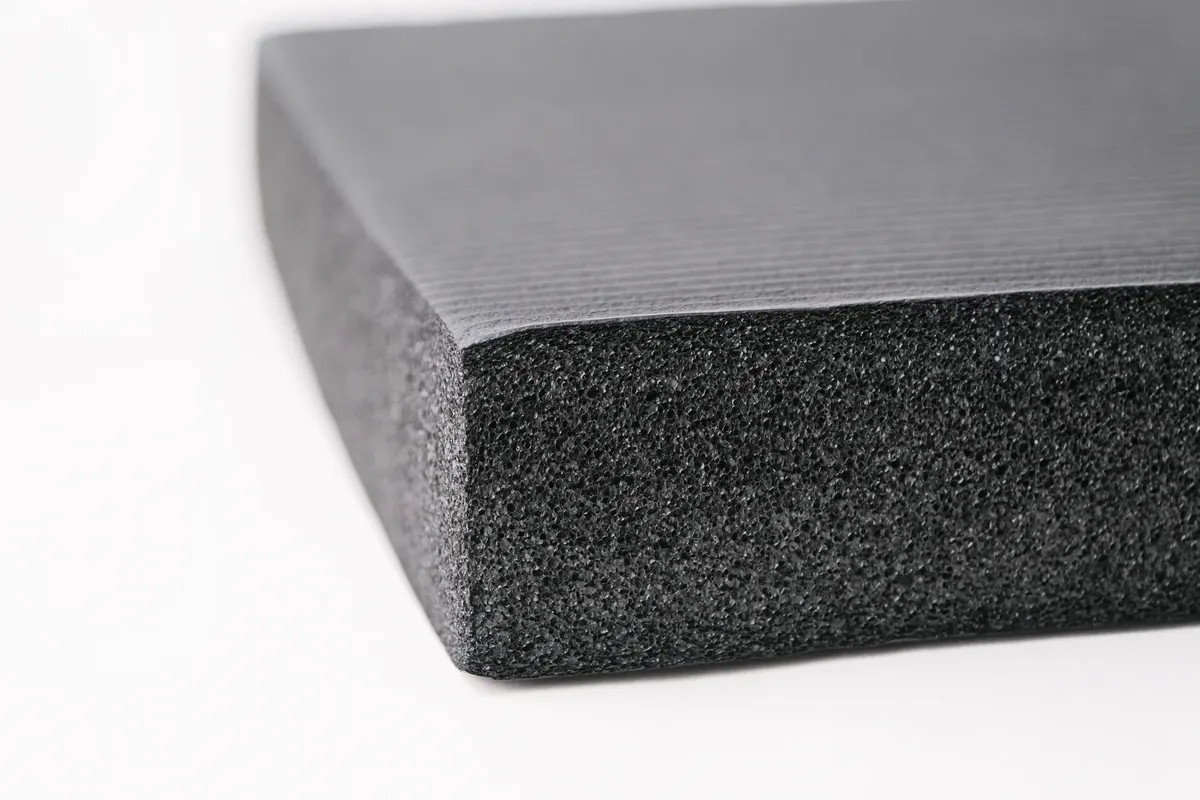
Si–H chemistry can be part of a deliberately designed foaming and curing process. Foamed silicone and silicone sponge requires coordinated control of gas generation, cell development and the silicone network.

Reactive silicone formulation manufacture
Formulators can combine documented Si–H data with the chosen vinyl base to design curing components. Reactive silicone bases and curing components provides the manufacturing context for that formulation work.
How to Use Polymethylhydrosiloxane
Obtain the current composition, end-group information, measured reactive hydrogen content, equivalent weight and viscosity method. Calculate the formulation from the measured Si–H and vinyl equivalents in the actual ingredients. Polymer class and equal addition mass do not define the same crosslink density or replacement ratio.
Prepare controlled trials with the intended catalyst, inhibitors, fillers and receiving polymer. Record mixing behavior, working time, cure profile and the mechanical or adhesion properties required in the finished product. Evaluate catalyst compatibility and potential inhibition using representative production materials.
For foaming or reactions involving water or hydroxyl groups, define the intended reaction pathway and assess gas generation alongside cure. Si–H reactions with protic materials can release hydrogen under relevant conditions. Review the complete process with the supplied SDS, including ventilation, ignition control and pressure management. Keep any gypsum or textile surface-treatment development tied to its own aqueous process and finished-system tests.
Guidelines for use
- Water repellency
- Apply as emulsion or solution with a suitable catalyst, then cure by drying at elevated temperature.
- Crosslinking
- Set the Si–H to vinyl ratio of the formulation in trials.
These levels are starting points. Determine the optimum level and method in trials under your own conditions.
Packaging and Storage
- Packaging: 25 kg plastic drum, 200 kg steel drum, 1,000 kg IBC. Other pack sizes on request.
- Storage: Store tightly sealed below 30 °C, away from alkalis, acids, amines and oxidizers. Shelf life is 12 months from the date of manufacture in unopened containers.
- Handling and safety: Releases flammable hydrogen on contact with alkali, acids, amines, metal salts or moisture with catalysts. Do not seal contaminated containers; vent safely. Keep away from ignition sources and incompatible materials. Wear eye protection and gloves. Read the Safety Data Sheet before use.

Frequently Asked Questions
What is PMHS used for in silicone formulations?
PMHS supplies Si–H functionality for reactive systems, including addition-cure formulations with vinyl silicones. Its useful role follows the documented composition and the selected reaction partners.
How do I calculate PMHS addition to a vinyl silicone?
Use the measured Si–H content or equivalent weight and the measured vinyl equivalents of your polymer. Establish the working formulation through catalyst, cure and finished-property trials.
Why is hydrogen generation relevant when handling PMHS?
Si–H can react with water or hydroxyl-containing materials under relevant conditions and release hydrogen. The actual mixture and process determine the controls, so review the current SDS before mixing and scale-up.

Samples, TDS and Technical Support
LANDUSIL offers samples, current TDS and SDS, and reactive-material selection support. Please provide:
- Vinyl or hydroxyl polymer and the intended reaction pathway
- Catalyst, fillers, mixing process and curing equipment
- Required equivalent data and finished-system evaluation targets
- Trial quantity, packaging preference and destination country