

DUVERA · Reactive End-Functional Polysiloxanes
LANDUSIL DUVERA 5100-L Trimethoxy/Vinyl Heterotelechelic Polydimethylsiloxane
LANDUSIL DUVERA 5100-L is a heterotelechelic polydimethylsiloxane with trimethoxy and vinyl terminal functions. This mixed-end design gives synthesis and formulation teams two different reaction handles to study on a silicone chain. Methoxy chemistry offers a hydrolysis-and-condensation route, while vinyl chemistry provides an unsaturated site for an appropriate Si–H reaction partner.
Use the material in projects where reaction sequence and chain-end control are part of the polymer design. Start with the supplied end-group data, choose the intended reaction for each function and follow the resulting material through compounding and cure. This approach connects molecular design with the processing demands of an adhesive or sealing formulation.
- CAS number
- See SDS

Product Identity
| Item | Information |
|---|---|
| Product | LANDUSIL DUVERA 5100-L |
| Product name | Trimethoxy/Vinyl Heterotelechelic Polydimethylsiloxane |
| Common description | Trimethoxy/vinyl end-functional PDMS |
| CAS number | See SDS |
| End functionality | Different trimethoxy and vinyl terminal functions |
| Chemical name | Trimethoxysilyl/vinyl-terminated polydimethylsiloxane |
| Reactive groups | Trimethoxysilyl and vinyl |
| Physical form | Liquid |
| Active content | approx. 100 % |
| Product family | Reactive End-Functional Polysiloxanes |
Specifications
| Property | Value | Test method |
|---|---|---|
| Appearance | Clear liquid | Visual |
| Kinematic viscosity, 25 °C | 80 – 120 mm²/s | Capillary viscometer, 25 °C |
Typical Properties
| Property | Typical value |
|---|---|
| Molecular weight | approx. 5,500 – 6,500 g/mol |
| Refractive index, nD20 | approx. 1.403 |
| Density, 25 °C | approx. 0.97 g/mL |
Typical values are provided for reference only and are not to be construed as specifications. Please refer to the current Technical Data Sheet (TDS) and Certificate of Analysis (CoA) for the supplied grade.
Key Features
- Mixed-end design: brings two nominated terminal chemistries into functional silicone development.
- Vinyl reaction handle: offers a route to attachment through hydrosilylation with a suitable Si–H-bearing material.
- Hydrolyzable end chemistry: methoxy functionality can generate silanols and participate in a selected condensation process.
- Sequence-led formulation: lets you investigate moisture timing and reaction-partner selection as part of polymer incorporation.
- Analytical design focus: connects end-group distribution with reactive equivalents and the role of the silicone segment in a complete network.
Applications

Reactive silicone formulation development
DUVERA 5100-L can enter reactive silicone base and curing-component preparation as a mixed-end polymer component. Establish the chosen reaction baseline and then study how the candidate changes mixing, storage and the response of the complete curing system.

End-functional polymer characterization
Manufacturers can assess the supplied polymer during incoming analysis and further formulation work. In hydrolyzable-end-group PDMS manufacture, its useful position is characterization of an already end-functional material and evaluation of any defined subsequent reaction.

Addition-cure adhesive formulation
The vinyl function can be investigated as an auxiliary reaction site within a deliberately designed network. For addition-cure silicone assembly adhesives, compare the candidate in a complete formulation containing the selected multi-vinyl base, Si–H component and catalyst, with the intended metal or glass joint.

Condensation electronic sealing
The methoxy-bearing function provides another route to investigate within a condensation formulation. In condensation-cure electronic sealing, connect the chosen reaction partners with moisture access, volatile removal and cure through the real assembly section.
How to Use Heterotelechelic Polydimethylsiloxane
Confirm the linkage at each end, end-group distribution, proportion of chains carrying both functions and supplied composition. Request methoxy and vinyl equivalents, residual silanol, water, low-molecular components and viscosity with its method. Total vinyl or a single spectral signal does not establish that every chain carries the intended pair of ends; choose complementary structural and distribution measurements.
For a vinyl/Si–H route, calculate the total reactive equivalents and evaluate the catalyst and inhibitor against all production-contact materials. A chain with one vinyl end may attach to or terminate part of a larger network. Network formation depends on the functionality supplied by the other ingredients as well as this polymer.
For a condensation route, define water exposure, the silanol or other appropriate partner and catalyst conditions. Methoxy hydrolysis releases methanol. Where Si–H is also present, examine reactions with water, alcohol or silanol and any resulting hydrogen generation. Establish moisture timing and reaction sequence through controlled trials; the mixed-end name cannot establish automatic coordination of both mechanisms.
Track storage viscosity, working time, conversion, gas release and cure through the section. For adhesives, include substrate inhibition and adhesion after conditioning. For electronic seals, assess voids, corrosion, insulation and thermal or humidity cycling on the actual assembly.
Guidelines for use
- Reaction order
- Choose which end reacts first and keep the other protected from catalyst or moisture until needed.
- Moisture control
- Keep the fluid dry; the trimethoxysilyl end hydrolyzes with moisture and releases methanol.
These levels are starting points. Determine the optimum level and method in trials under your own conditions.
Packaging and Storage
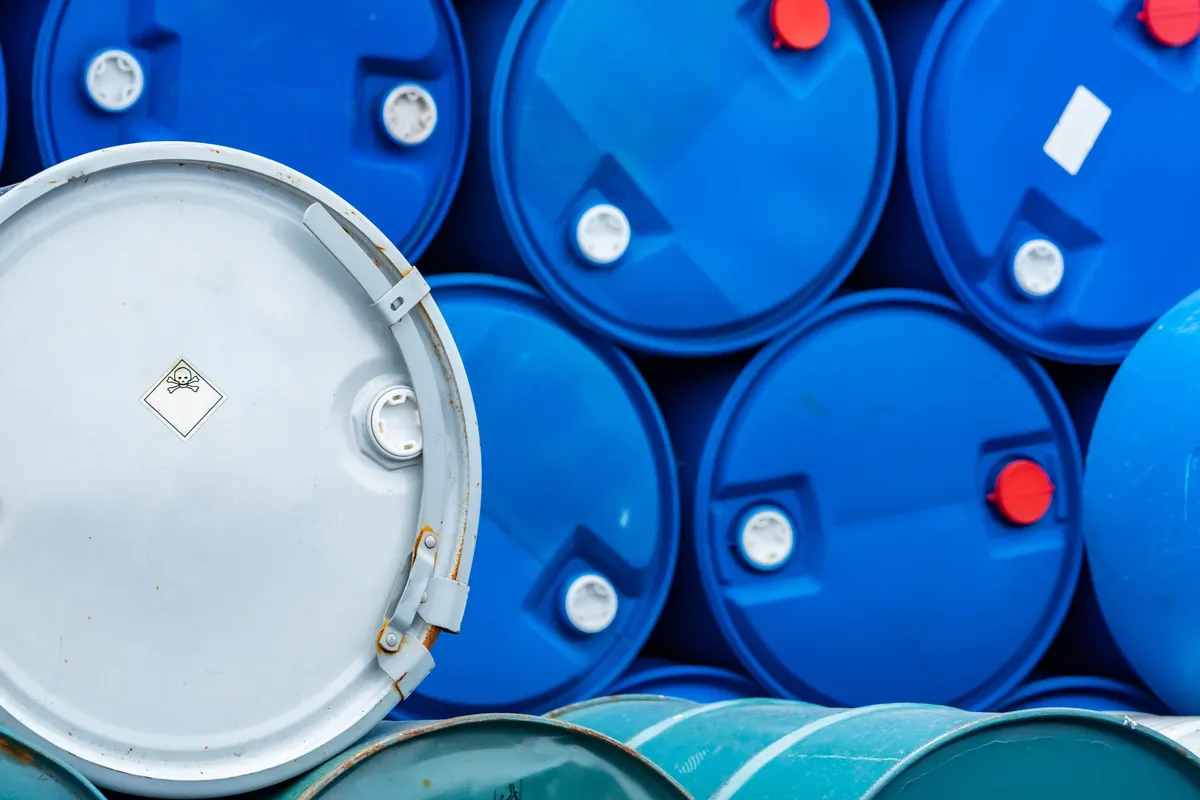
- Packaging: 25 kg plastic drum, 200 kg steel drum, 1,000 kg IBC. Other pack sizes on request.
- Storage: Store in tightly closed original containers in a cool, dry place under dry air or nitrogen. Shelf life is 12 months from the date of manufacture in unopened containers.
- Handling and safety: Methanol is released on contact with moisture; keep away from ignition sources and ventilate. Avoid contact with eyes. Read the Safety Data Sheet before use.
Frequently Asked Questions
What does heterotelechelic mean for a silicone polymer?
It describes a polymer designed with different functional chain ends. In DUVERA 5100-L, those functions are trimethoxy and vinyl; the supplied end-group distribution guides the actual reaction design.
How do I choose reaction partners for trimethoxy/vinyl PDMS?
Select a suitable Si–H component and catalyst for the vinyl route, or a defined condensation partner and conditions for the methoxy route. Investigate any staged combination through controlled formulation trials.
Which data help confirm a mixed-end PDMS structure?
Use end-group analysis together with molecular-distribution and suitable chain-level information. Request both functional equivalents, residual groups and the methods used to establish the supplied structure.

Samples, TDS and Technical Support
LANDUSIL supplies samples, current TDS and SDS, and functional-polymer selection support. Please include:
- Intended reaction sequence and target polymer or formulation
- Proposed Si–H, silanol or other reaction partners and catalysts
- End-group data, moisture-control process and evaluation methods
- Expected quantity, packaging preference and destination country