
Technical Data Sheet
LANDUSIL LEGRA 5031-L
Specification limits, typical properties, guidelines for use, handling, storage and packaging in one document.
FamilyGrades

LEGRA · Alkyl Silanes
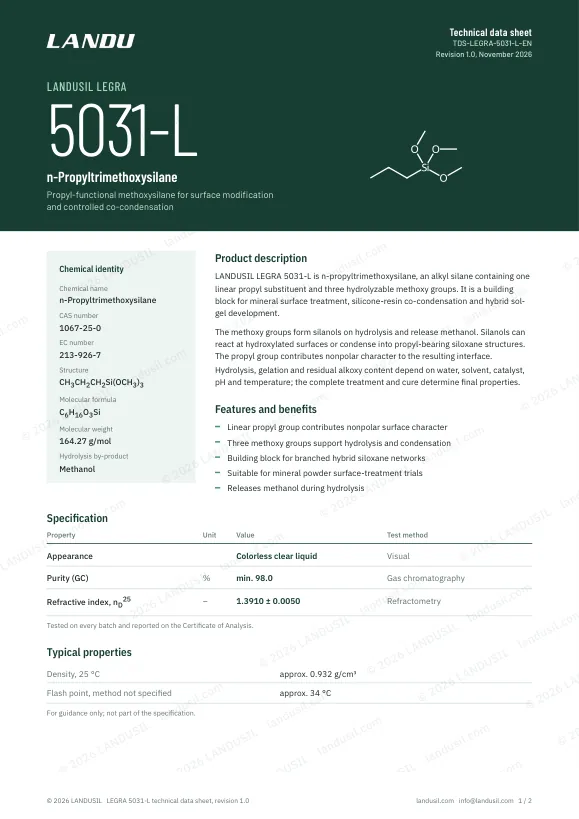
LANDUSIL LEGRA 5031-L is n-propyltrimethoxysilane, CAS 1067-25-0, a reactive alkyl silane for developing hydrophobic mineral treatments and surface-modified powders. The straight-chain propyl substituent changes the organic character of the interface, while three methoxy groups provide hydrolysis and condensation sites.
This grade gives formulators a methoxy route to propyl-functional surfaces, silane concentrates and controlled hybrid precursors. Build the treatment around the substrate and the intended carrier, with methanol generation included in preparation, application and drying.

| Item | Information |
|---|---|
| Product | LANDUSIL LEGRA 5031-L |
| Chemical name | n-Propyltrimethoxysilane |
| CAS number | 1067-25-0 |
| Molecular formula | C6H16O3Si |
| Molecular weight | 164.27 g/mol |
| EC number | 213-926-7 |
| Structure | CH3CH2CH2Si(OCH3)3 |
| Hydrolysis by-product | Methanol |
| Product family | Alkyl Silanes |
| Property | Value | Test method |
|---|---|---|
| Appearance | Colorless clear liquid | Visual |
| Purity (GC) | min. 98.0 % | Gas chromatography |
| Refractive index, nD25 | 1.3910 ± 0.0050 | Refractometry |
| Property | Typical value |
|---|---|
| Density, 25 °C | approx. 0.932 g/cm³ |
| Flash point, method not specified | approx. 34 °C |
| Boiling point | approx. 142 °C |
Typical values are provided for reference only and are not to be construed as specifications. Please refer to the current Technical Data Sheet (TDS) and Certificate of Analysis (CoA) for the supplied grade.
Technical Data Sheet
Specification limits, typical properties, guidelines for use, handling, storage and packaging in one document.

Use LEGRA 5031-L as a reactive ingredient when developing a compatible alkyl-silane formulation. Silane water-repellent concentrate manufacture involves selecting carrier, co-silanes and activation conditions around the final treatment process.
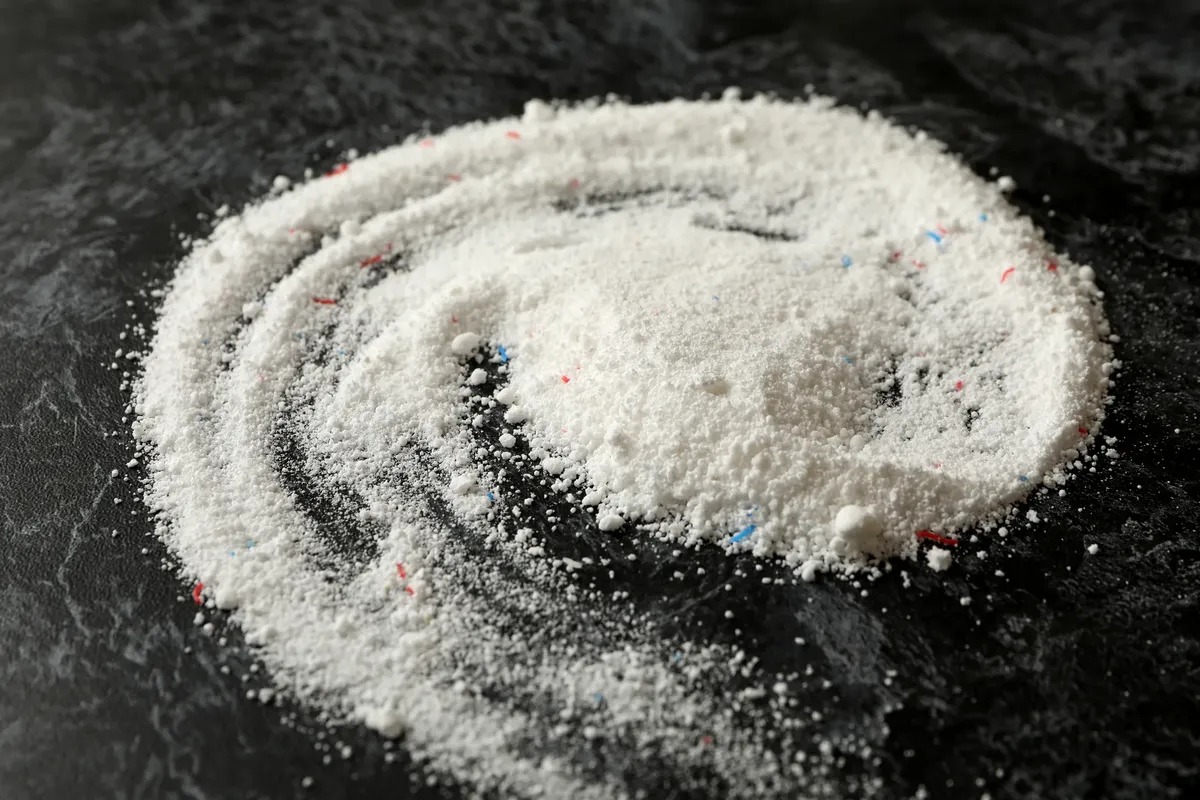
The propyl group provides surface-energy adjustment on suitably reactive mineral particles. In quartz and fused silica treatment, coordinate hydrolysis and powder coverage with the drying step and the receiving binder.
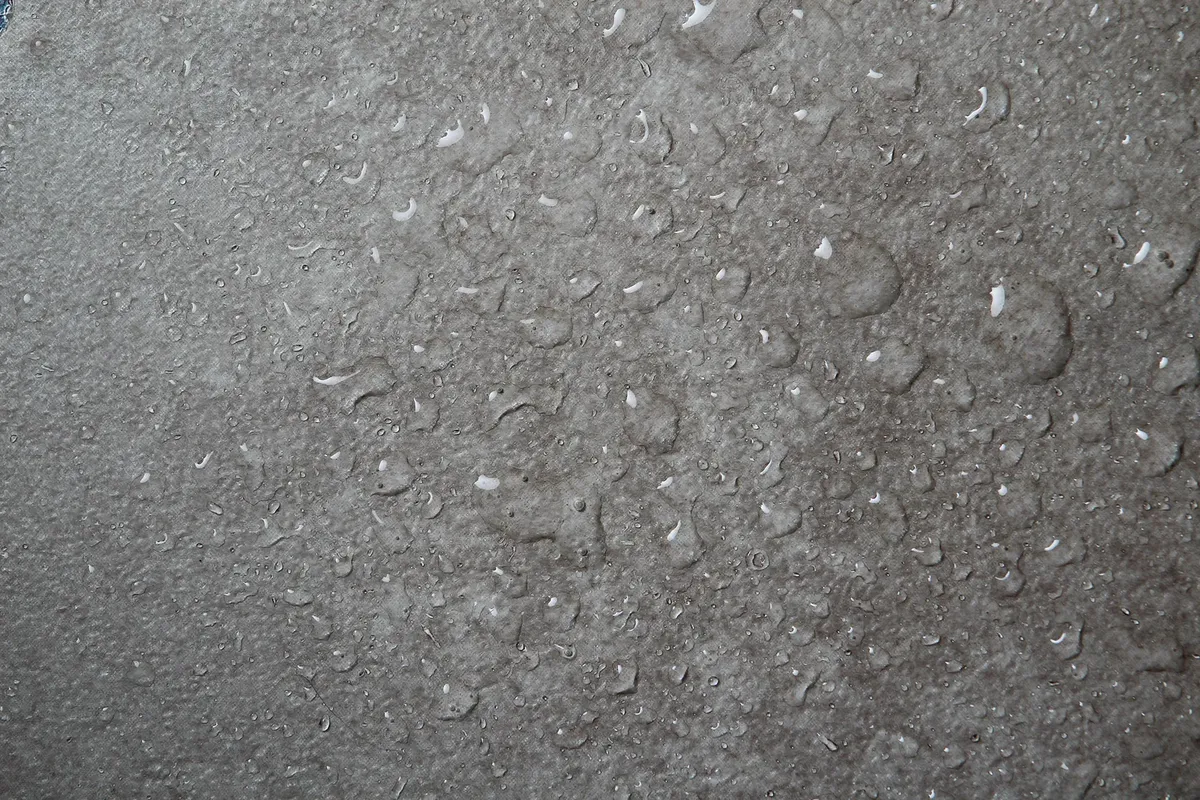
LEGRA 5031-L supports a methoxy-based approach to a defined hydrophobic mineral surface treatment. For concrete protection, prepare a formulation and application method suited to the accessible pore structure and substrate moisture.

The molecule can be incorporated into treatments intended to moderate liquid-water uptake on suitable porous minerals. Masonry and natural stone protection connects the treatment route with the actual stone or brick, color requirements and vapor transport.
Define whether you need a monomer blend, a controlled hydrolysate or a treated surface. For concentrate development, assess the carrier and other ingredients before introducing water or catalyst. Monitor residual methoxy groups, silanols, condensation and storage behavior as the formulation develops. Methoxy and ethoxy versions need their own working conditions and volatile balance.
For powder modification, select a repeatable moisture condition and treatment level based on the mineral surface. Check distribution, retained treatment and drying, then measure moisture uptake, flow and agglomeration. Evaluate compound viscosity and behavior in the intended resin. The propyl group serves surface-energy adjustment; choose another functional group where the resin requires a specific organic reaction.
For building surfaces, establish cleaning, substrate moisture and application conditions on representative specimens. Record treatment uptake and compare water absorption, vapor transmission, color and staining after relevant conditioning. Assess the cured surface as well as the fresh treatment. Use crack repair and joint treatment as appropriate to the overall construction system.
For a sol-gel extension, follow gel time, viscosity, residual alkoxy groups and film cracking in the actual co-precursor mixture. Establish dosage, working-solution life and finished-material performance through the complete process. Include metal adhesion, corrosion, optical or outdoor tests when those properties are part of the target product.
These levels are starting points. Determine the optimum level and method in trials under your own production conditions.
It is a reactive ingredient for suitable mineral hydrophobization, silica treatment and silane-concentrate development. Its propyl substituent adjusts surface energy and its methoxy groups provide the surface-reaction route.
The hydrolyzable groups change from ethoxy to methoxy, and the released alcohol changes from ethanol to methanol. Reassess hydrolysis, condensation, drying and working-solution stability in your process.
Compare uptake, water absorption, vapor transmission and appearance on the actual stone. Include staining and wet/dry aging relevant to the exposure conditions of the finished treatment.

LANDUSIL offers samples, current TDS and SDS, and selection support. Please include: