

Building & Construction
Silane Water Repellent for Masonry and Natural Stone
Rainwater absorption can leave masonry repeatedly wet and alter the appearance of porous stone. A silane water repellent for masonry changes wetting at accessible mineral pores, reducing liquid-water uptake while allowing you to develop a treatment around the required natural finish.
LANDUSIL supplies alkyl-silane actives, oligomers, emulsions and an alkaline siliconate route for masonry-care formulators, brick and tile plants, and stone processors. The useful starting point is your actual brick or stone, its surface finish and the operation that follows treatment.
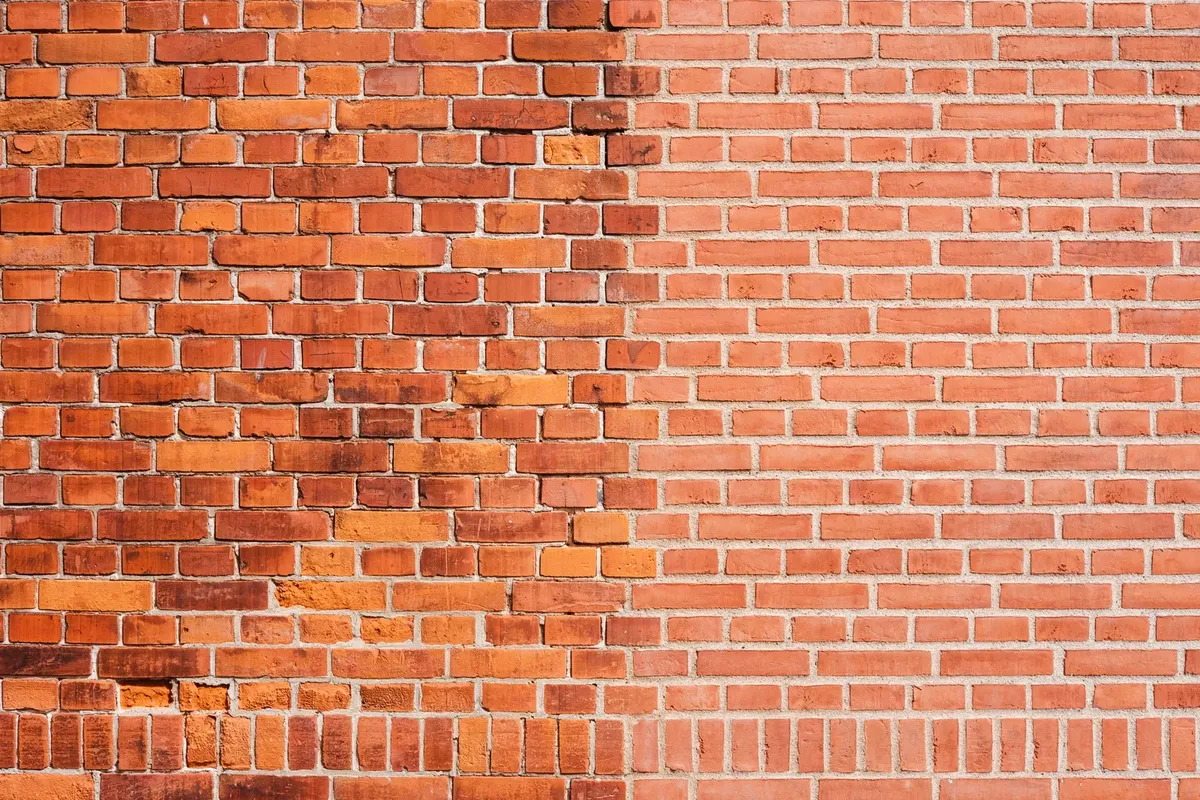
What Silane and Siloxane Chemistry Does for Masonry
- Limits rainwater wetting. Hydrophobic pore surfaces reduce capillary absorption in suitable mineral substrates.
- Offers a penetrating treatment route. Alkyl-silane formulations provide an alternative to a continuous decorative topcoat.
- Fits different production positions. Factory spray or immersion and site application can use different delivery forms.
- Supports natural-finish development. Formulation and deposited amount can be selected around the desired color and gloss.
- Addresses units and joints together. A masonry trial can include both brick faces and mortar, reflecting the different water paths in a wall.
Typical Uses
End use: Fired clay brick and roof tile
What matters most
Firing-batch variation, uptake, drying and appearance before packing
End use: Porous block and aerated concrete
What matters most
Absorbed amount, treatment distribution and later mortar or coating bond
End use: Sandstone and limestone facades
What matters most
Mineral composition, salts, dry and wet color, and drying behavior
End use: Dense or polished architectural stone
What matters most
Limited uptake, haze, streaks and unabsorbed surface material
End use: Repointed masonry
What matters most
New mortar, old units, repairs and water entry at their interfaces
End use: Stone paving and carved features
What matters most
Surface finish, runoff, wear and accessibility during application
Recommended LANDUSIL Products
| Product | Chemistry | CAS | Why choose it |
|---|---|---|---|
| LANDUSIL LEGRA 5050-L | n-Octyltriethoxysilane | 2943-75-1 | Ethoxy-route active for developing penetrating masonry and selected-stone formulations |
| LANDUSIL LEGRA 5051-L | n-Octyltrimethoxysilane | 3069-40-7 | A methoxy-route octyl silane for a separate hydrolysis and working-liquid design |
| LANDUSIL ANCORIS 5010-L | Solvent-based octyl silane/siloxane oligomer | Mixture – see SDS | Oligomeric raw material for compatible mineral-surface treatment formulations |
| LANDUSIL SIVERA 1030-E-50 | Silane/siloxane water-repellent emulsion | Mixture – see SDS | An emulsion route for porous masonry treatments with defined dilution and application conditions |
| LANDUSIL SIVERA 1040-E | Waterborne octyl silane emulsion | Mixture – see SDS | Waterborne octyl-silane delivery for comparison on the intended mineral surface |
| LANDUSIL SIVERA 2010-W-30 | Potassium methylsilanolate solution | Mixture – see SDS | A distinct alkaline aqueous route for suitable brick, tile and block development |
| LANDUSIL NOVERA 1010-L-50 | Methyl Silicone Resin Solution | Mixture – see SDS | Methyl silicone resin solution for formulators developing masonry surface finishes, mineral facade coatings and resin dispersions |
How to Select a Silane Water Repellent for Masonry
Identify the mineral and its finish
Sandstone, limestone, marble and granite differ in mineral composition and pore structure. Even stone sold under one broad name can vary by source. Sawn, flamed, honed and polished finishes expose different surfaces, and resin filling, wax or an earlier sealer changes the treatment position further.
For factory-treated units, identify the temperature and moisture condition after firing or curing. For installed walls, include mortar, repairs and adjacent materials in the substrate description.
Choose the active and carrier together
LEGRA 5050-L releases ethanol on hydrolysis; LEGRA 5051-L releases methanol. These by-products and the preparation conditions belong in the formulation and safety assessment. Changing the alkoxy group requires a defined working-liquid design.
A solvent-based oligomer and a waterborne emulsion need different preparation and application arrangements. For emulsions, active-phase identity and dilution behavior matter. Longer alkyl chains are another formulation variable, but chain length alone does not establish deeper penetration or oil repellency.
Treat siliconate and resin routes separately
Potassium methylsiliconate is an alkaline organosilicon solution. It differs from ordinary potassium silicate and from a neutral silane emulsion. Atmospheric carbon dioxide participates in developing its water-repellent structure.
A resin-containing treatment can leave material near the surface or form a film. That route introduces separate choices about gloss, color and the following coating operation. A clear liquid does not automatically produce an invisible finish.
Application and Evaluation Guidelines
Establish the moisture source before treating an existing wall. Face exposure to rain, leakage through joints, rising moisture and water entering from behind require different responses. Repair defects and assess salts or loss of cohesion before choosing a surface impregnation.
Use representative samples from the same source and finish, retaining an untreated control. Define acceptable appearance before testing: dry and wet color, gloss, haze, streaking and residue. For site work, include a trial area containing the relevant joints, repairs and stone variation.
Confirm supplied composition, carrier and active content from current documents. Examine emulsion dilution and use-period stability with your water. For alkaline siliconate, evaluate the drying environment, carbon-dioxide exposure and visible deposits on the intended colored or porous units. Use the SDS when assessing formulation and handling controls.
Record applied and absorbed mass, moisture conditioning and development time. Compare capillary uptake with the appropriate surface-absorption method; these measure different behavior. On very dense stone, first establish whether the untreated material absorbs enough water for the method to distinguish candidates.
Where required, assess drying, water-vapor movement, abrasion and later adhesive or paint bond. Investigate whitening by separating substrate salts, unabsorbed treatment, emulsion change and resin-rich deposits. Water beading alone does not establish consolidation, stain resistance, oil repellency or whole-wall moisture performance.
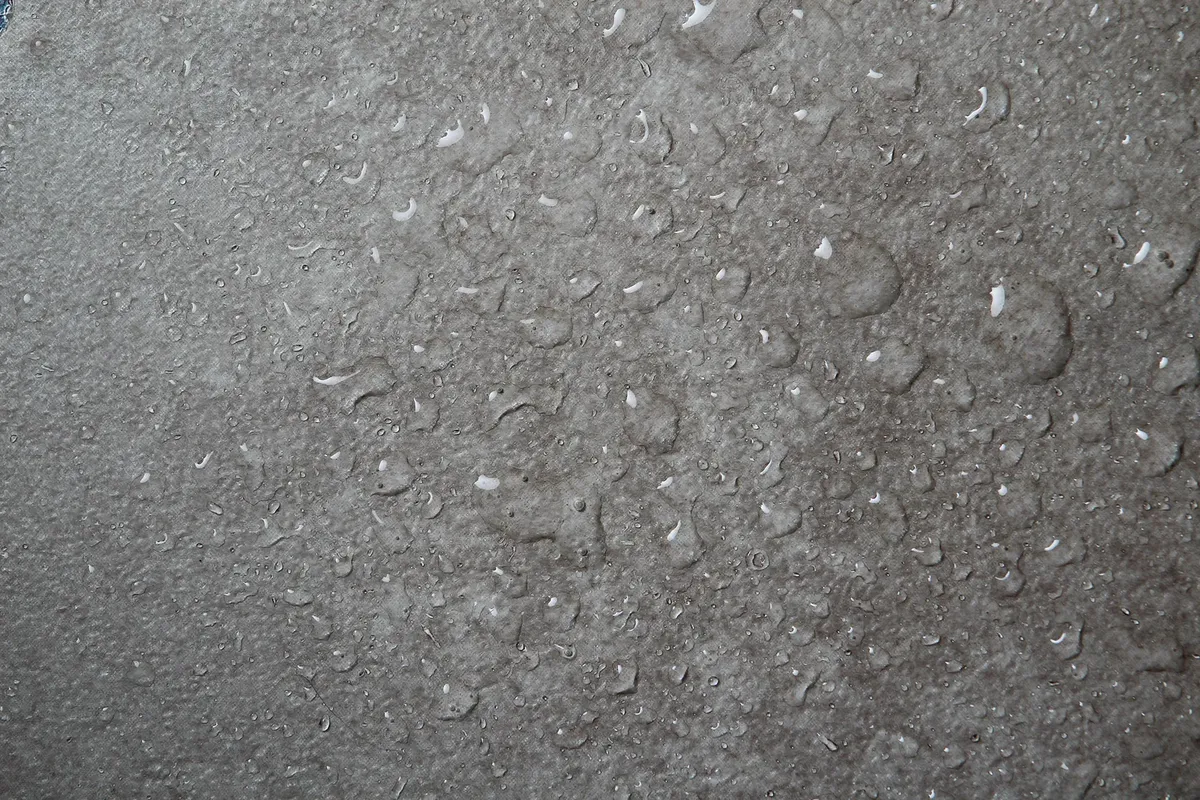
Frequently Asked Questions
Which factors determine whether one water repellent suits a natural stone?
Stone mineralogy, porosity, finish and previous processing vary. Representative samples define a useful selection, while the broad commercial stone name supplies only part of the brief.
How should a treated brick result be interpreted for a wall?
It describes the unit and treatment process. The wall also includes mortar joints, cracks, detailing and workmanship, so an assembly claim requires an assembly assessment.
What tests distinguish water beading from oil-stain resistance?
Water and oil have different wetting behavior. Stain protection requires a separate contaminant and cleaning assessment relevant to the intended surface.
What treatment addresses crumbling stone when water repellency is insufficient?
Cohesion is a separate restoration task. A consolidant is selected around weakened mineral material and treatment depth; a hydrophobic surface alone does not establish strengthening.

Samples and Technical Support
LANDUSIL provides samples, TDS, SDS and selection support for masonry and stone-treatment formulations; please describe:
- Mineral type, source, finish, porosity and previous treatments
- Known salts, current moisture path and condition of joints or repairs
- Factory or site process, equipment and surfaces to be treated
- Required appearance, drying behavior and later coating or bonding
- Target absorption method and any wear or staining requirement
- Expected quantity, preferred packaging and destination country