

ANCORIS · Functional POSS
LANDUSIL ANCORIS 7040-L Mercaptopropyl-Functional POSS
LANDUSIL ANCORIS 7040-L is a mercaptopropyl-functional POSS formulation for developing compatible resins with a defined thiol reaction. This thiol-functional silsesquioxane provides an SH-bearing route for coating, adhesive and hybrid-resin formulators selecting an appropriate unsaturated or epoxy partner.
Choose the reaction first, then the process. A designed thiol–ene formulation uses a suitable double bond and initiation scheme; a thiol–epoxy reaction uses an epoxide and compatible catalysis. Each route gives you a specific basis for selecting the addition point, reactive balance and cure evaluation.
- CAS number
- Mixture – see SDS

Product Identity
| Item | Information |
|---|---|
| Product | LANDUSIL ANCORIS 7040-L |
| Chemical name | Mercaptopropyl polyhedral oligomeric silsesquioxane |
| Material type | Thiol-functional silsesquioxane formulation |
| CAS number | See SDS |
| Functionality | Thiol (mercaptan) |
| Physical form | Viscous liquid |
| Product family | Functional POSS – ANCORIS Silane Oligomers & Prehydrolysates |
Specifications
| Property | Value | Test method |
|---|---|---|
| Appearance | Clear to hazy viscous liquid | Visual |
| Viscosity, 25 °C | 3,000 – 7,000 mPa·s | Rotational viscometer |
Typical Properties
| Property | Typical value |
|---|---|
| Functionality | Thiol (mercaptopropyl) |
| Form | Viscous liquid cage mixture |
Typical values are provided for reference only and are not to be construed as specifications. Please refer to the current Technical Data Sheet (TDS) and Certificate of Analysis (CoA) for the supplied grade.
Key Features of Mercaptopropyl-Functional POSS
- Thiol reaction input: offers accessible SH functionality to match with the selected reactive partner.
- Unsaturated-resin route: supports investigation of thiol participation in an appropriately initiated coating or adhesive formulation.
- Epoxy modification option: provides the thiol side of a deliberately designed, catalyzed ring-opening system.
- Hybrid resin design: brings a functional silsesquioxane component into the organic formulation.
- Controlled reaction balance: focuses development on measured SH equivalents, conversion and remaining functionality.
Applications

Reactive functional coatings
Explore ANCORIS 7040-L in compatible functional coating formulations or UV-cured coating systems. Select the unsaturated resin and initiation route, then evaluate thiol participation alongside film appearance and the desired surface response.

UV acrylic assembly adhesives
Assess the grade within a designed UV acrylic adhesive. Plan resin premixing, air removal and exposure around the actual bond-line geometry, including substrate transmission and regions shielded from the light.

Thiol–epoxy adhesive modification
For reactive epoxy adhesive modification, establish how the ingredient supplements or replaces another thiol component. Use the SH equivalent balance and the chosen catalyst to organize comparisons of working time, conversion and joint behavior.

Hybrid resin manufacture
Use a defined thiol–epoxy or other suitable thiol reaction when developing hybrid resin intermediates. Control the reaction endpoint so remaining functionality, soluble material and storage behavior match the intended downstream cure.
How to Use
Confirm the supplied composition, carrier, thiol assay and method, accessible SH distribution, moisture and residuals using the current TDS and SDS. The POSS name does not establish cage size, a fixed thiol count, multifunctional crosslinking or hydrolyzable silicon groups for mineral attachment. Select the reaction role from measured functionality.
Distinguish radical thiol–ene addition from the chain growth and thiol-mediated chain transfer that can coexist in acrylate systems. A thiol–Michael route uses an appropriate activated double bond and catalyst; thiol–epoxy chemistry is epoxide opening. Match each route with its own partner, initiation or catalysis and functional-group measurements.
Prepare a compatible resin premix and monitor dispersion, viscosity and storage before completing the reactive package. Control catalyst contact and watch for premature reaction. In UV work, measure SH and double-bond conversion through the film or joint with the actual spectrum, atmosphere, thickness and pigment content. Compare conversion with surface tack, residuals, color and adhesion.
In epoxy work, follow both SH and epoxide consumption, heat generation and working time. Oxidation can consume thiol during storage, so compare available SH before and after ageing. Evaluate conditioned properties using matched controls; assess thick sections, optical effects and mineral or metal interfaces through their actual process. Establish oxygen response and cure speed in the full formulation.
Guidelines for use
- Incorporation
- Blend into the resin or a compatible solvent; avoid contact with strong oxidisers and with amines before use.
- Cure
- Cure with UV (acrylate or vinyl partners) or with epoxy resins and a base catalyst.
These levels are starting points. Determine the optimum level and method in trials under your own conditions.
Packaging and Storage
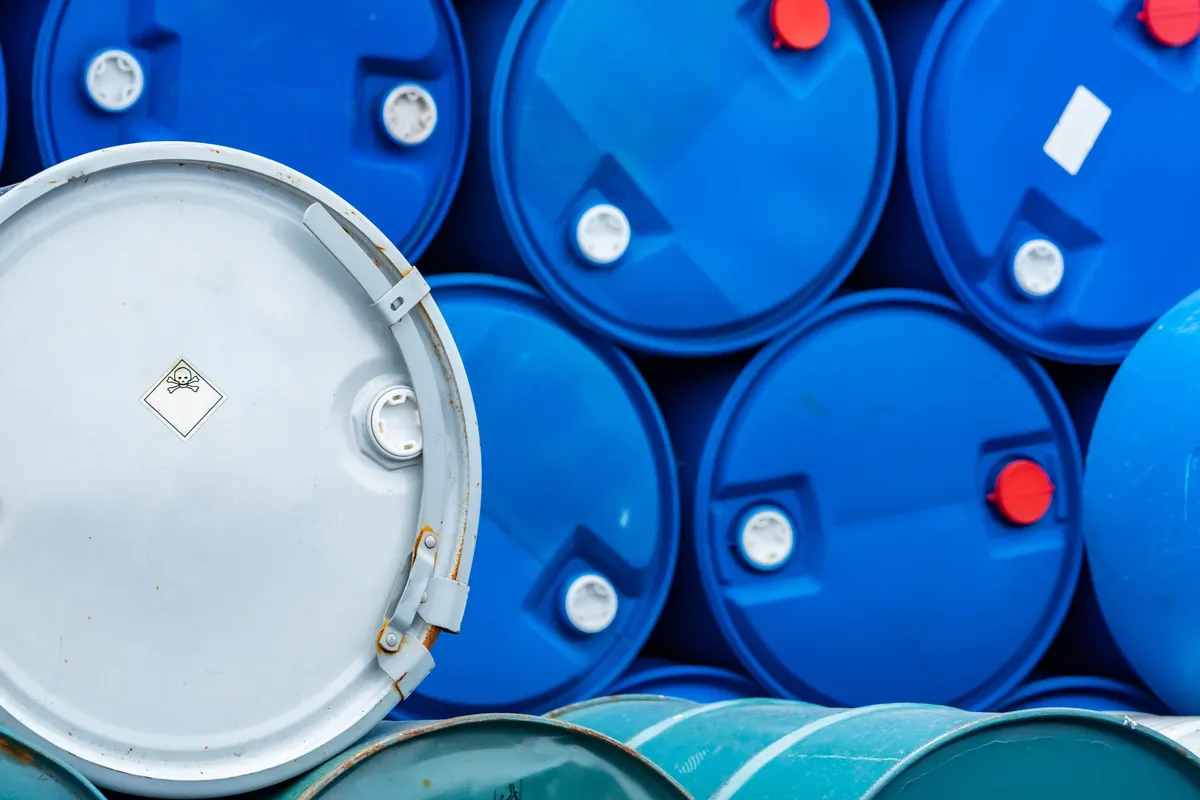
- Packaging: 25 kg plastic drum, 200 kg steel drum, 1,000 kg IBC. Other pack sizes on request.
- Storage: Store in tightly closed original containers in a cool, dry place away from direct sunlight. Shelf life is 12 months from the date of manufacture in unopened containers.
- Handling and safety: Thiol groups can have a strong odour; use with ventilation. Wear gloves and eye protection; avoid skin and eye contact. Read the Safety Data Sheet before use.
Frequently Asked Questions
What is mercaptopropyl-functional POSS used for?
It is an ingredient for developing resins with a defined thiol reaction, including suitable unsaturated and epoxy systems. Select the process from the measured SH functionality and compatible partner.
How is thiol–epoxy chemistry different from thiol–Michael addition?
Thiol–epoxy chemistry opens an epoxide. Thiol–Michael addition uses an appropriate activated double bond. Each route needs its own catalyst and reaction design.
What should I measure in a thiol-containing UV coating?
Measure SH and double-bond conversion as well as through-film cure, tack and extractables. Include light conditions, atmosphere and the full pigmented or clear formulation.
How should I monitor storage stability?
Track available SH, viscosity, color and dispersion over the intended storage conditions. Compare functional-group consumption with the products formed and the remaining cure capability.

Samples, TDS and Technical Support
LANDUSIL offers ANCORIS 7040-L samples, TDS, SDS and formulation selection support. Please include:
- Unsaturated or epoxy partner and proposed SH balance
- Catalyst or initiator, mixing sequence and exposure method
- Working-time, conversion and conditioned-performance targets
- Estimated quantity, packaging preference and destination country